

#Short Answer
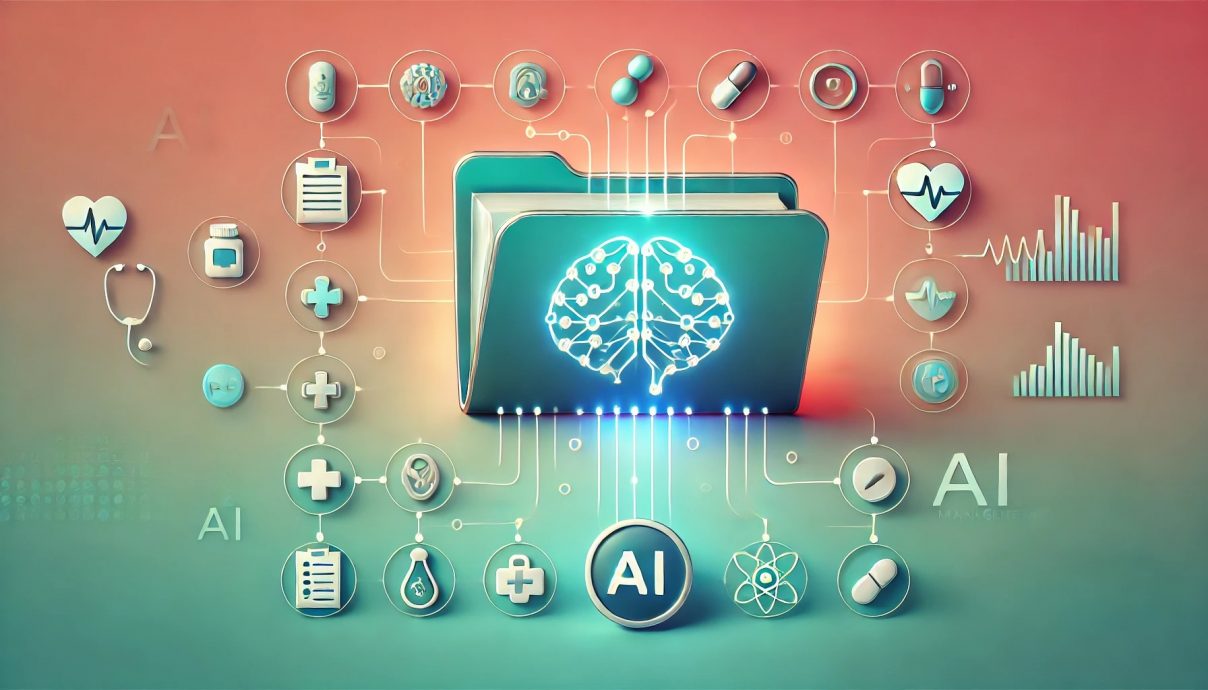
Artificial Intelligence and Electronic Health Records is a critical topic in Artificial Intelligence, bridging theory and practical application.
#Infobox
#History / Background
#Early Developments in EHRs
The concept of digital health records dates back to the 1960s, with early implementations focusing on hospital-based systems. The first EHR systems were developed in the 1970s, primarily for research and academic purposes. However, widespread adoption was limited due to technological constraints and high costs. The 1990s saw the emergence of more sophisticated EHR systems, driven by advances in computing and the need for standardized patient records.
#Rise of AI in Healthcare
Artificial Intelligence began gaining traction in healthcare during the 1980s and 1990s, with early applications in diagnostic imaging and expert systems. The development of machine learning algorithms in the 2000s enabled more sophisticated data analysis, paving the way for AI integration into EHRs. The introduction of deep learning in the 2010s further accelerated AI's role in healthcare, particularly in natural language processing and predictive analytics.
#Convergence of AI and EHRs
The convergence of AI and EHRs became prominent in the mid-2010s, as healthcare organizations sought to leverage AI for improving clinical workflows and patient outcomes. Major EHR vendors, such as Epic and Cerner, began incorporating AI-driven features into their platforms, including automated documentation, clinical decision support, and predictive analytics. Government initiatives, such as the U.S. Health Information Technology for Economic and Clinical Health (HITECH) Act, further incentivized the adoption of EHRs and AI technologies.
#How It Works
#Data Collection and Integration
AI-powered EHR systems begin by aggregating patient data from various sources, including structured fields (e.g., lab results, medication lists) and unstructured data (e.g., physician notes, discharge summaries). Natural Language Processing (NLP) algorithms parse unstructured text to extract relevant information, converting it into structured data that can be analyzed by machine learning models.
#Predictive Analytics and Risk Stratification
Machine learning models analyze historical and real-time patient data to identify patterns and predict potential health risks. For example, AI can stratify patients based on their likelihood of developing chronic conditions, such as diabetes or heart disease, enabling early intervention. Predictive models also assist in identifying patients at risk of hospital readmission, allowing healthcare providers to implement targeted care plans.
#Clinical Decision Support
AI-driven clinical decision support systems (CDSS) provide healthcare professionals with evidence-based recommendations. These systems analyze patient data against clinical guidelines and best practices, alerting providers to potential drug interactions, allergies, or deviations from standard care protocols. CDSS enhances diagnostic accuracy and reduces the likelihood of medical errors.
#Automated Documentation
AI-powered voice recognition and NLP tools automate the documentation process by transcribing physician-patient interactions into structured EHR entries. This reduces the administrative burden on clinicians, allowing them to focus more on patient care. Automated documentation also improves data completeness and accuracy, as it minimizes the risk of human error in manual data entry.
#Interoperability and Data Sharing
AI facilitates interoperability by standardizing data formats and enabling seamless data exchange between different EHR systems. Machine learning algorithms can map disparate data sources to a common schema, ensuring that patient information is accessible across healthcare providers. This interoperability is critical for coordinated care, particularly in complex cases involving multiple specialists.
#Important Facts
- AI reduces documentation time by up to 50% by automating data entry and transcription, allowing clinicians to spend more time with patients.
- Predictive analytics in EHRs can identify patients at risk of sepsis up to 24 hours before clinical symptoms appear, significantly improving early intervention rates.
- Natural Language Processing (NLP) can extract structured data from unstructured clinical notes with an accuracy of over 90%, enhancing data completeness in EHRs.
- AI-driven EHR systems improve diagnostic accuracy by up to 30% by analyzing patient histories, lab results, and imaging data in real time.
- Interoperability challenges remain a significant barrier, with only 40% of hospitals in the U.S. reporting full EHR interoperability as of 2023.
- Regulatory compliance, such as HIPAA and GDPR, is critical for AI-EHR integration, ensuring patient data privacy and security.
- AI models require continuous training and validation to maintain accuracy, as patient data and clinical guidelines evolve over time.
- The global AI in healthcare market is projected to reach $45.2 billion by 2026, with EHR management being a key application area.
#Timeline
- : AI
powered tools that provide healthcare professionals with evidence-based recommendations.
- : A branch of AI that enables computers to understand and process human language, used for extracting data from clinical notes.
- : The use of AI and statistical techniques to analyze historical data and predict future outcomes, such as patient readmissions or disease progression.
- : The ability of different EHR systems to exchange and use patient data seamlessly, facilitated by AI
driven standardization.
- : A subset of AI that enables systems to learn from data and improve their performance over time without explicit programming.
- : A network that allows healthcare providers to securely share patient information, enhanced by AI for data integration and analysis.
- : The potential for AI models to produce biased results due to flawed training data or algorithms, a critical consideration in healthcare AI.
- : A machine learning approach that enables AI models to be trained across multiple decentralized devices or institutions without sharing raw data, enhancing privacy in EHR analysis.
#Related Terms
#FAQ
What does Artificial Intelligence and Electronic Health Records cover?
Artificial intelligence and electronic health records covers practical examples, benefits, limitations, and important considerations for readers.
Why is Artificial Intelligence and Electronic Health Records important?
It helps readers understand key concepts, compare practical use cases, and evaluate how Healthcare AI decisions affect outcomes, risks, and implementation choices.
What should readers verify before applying this topic?
Readers should compare the benefits, limitations, data requirements, and related themes such as Artificial, Intelligence, Electronic before using the ideas in real projects.
#References
- Artificial Intelligence and Electronic Health Records terminology and background research
- Artificial Intelligence and Electronic Health Records use cases, implementation examples, and limitations
- Healthcare AI best practices, standards, and risk guidance
- Artificial case studies, benchmarks, and current industry analysis


Comments
No comments yet. Start the discussion with a useful note.