


#Short Answer
Artificial Intelligence in Education leverages AI to personalize learning, automate administrative tasks, and improve educational outcomes through adaptive systems and data analytics.
#Infobox
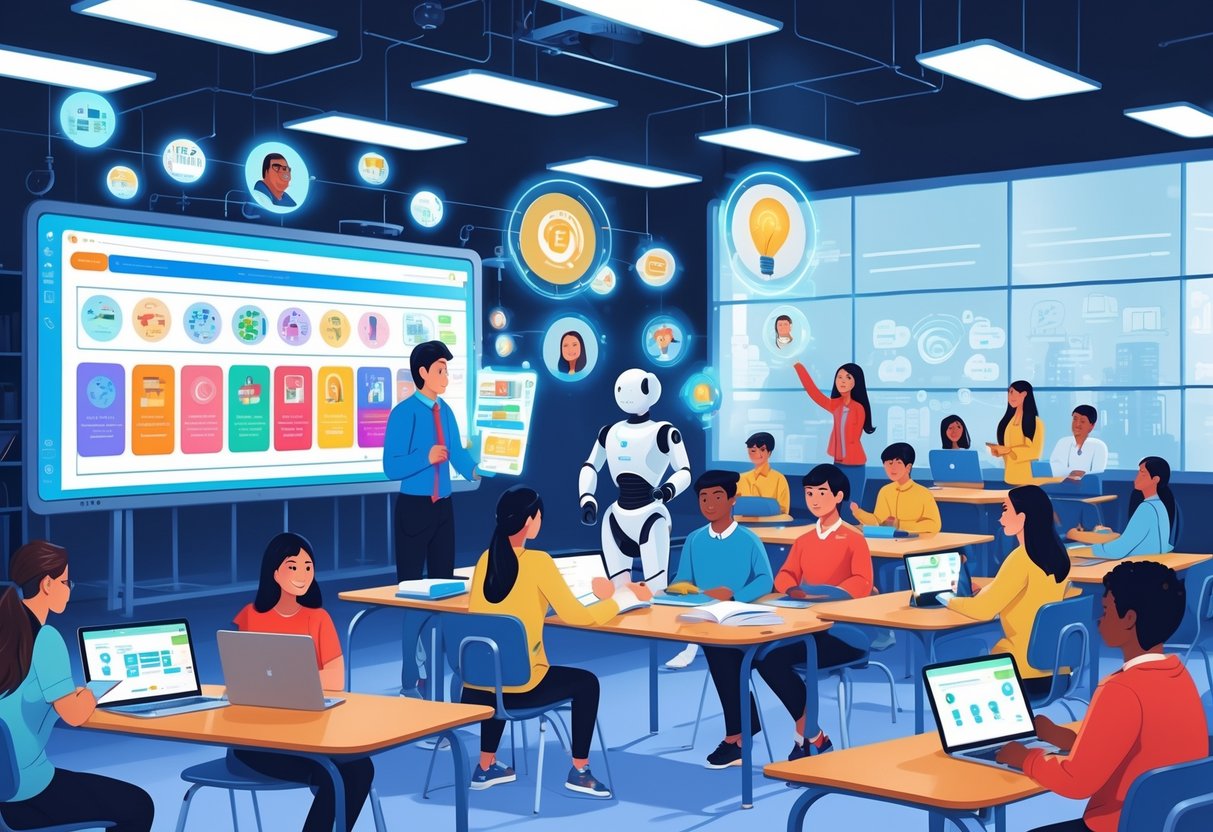
Artificial Intelligence in Education (AIEd) refers to the application of artificial intelligence (AI) technologies to enhance teaching, learning, and educational administration. It encompasses tools that personalize learning experiences, automate administrative tasks, and provide data-driven insights to educators and institutions. AIEd is transforming traditional classrooms by enabling adaptive learning systems, intelligent tutoring systems (ITS), and automated grading mechanisms, making education more efficient, inclusive, and scalable.
#Overview
AIEd integrates AI technologies such as machine learning, natural language processing (NLP), and big data analytics to create intelligent systems that support educators and learners. These systems analyze student performance, identify learning gaps, and tailor educational content to individual needs. AIEd also addresses challenges like teacher shortages, resource constraints, and accessibility by providing scalable solutions that adapt to diverse learning styles.
The primary goals of AIEd include:
- Personalizing learning experiences to match individual student needs.
- Automating administrative tasks such as grading and scheduling.
- Enhancing engagement through interactive and gamified learning tools.
- Providing real-time feedback to educators and learners.
- Improving accessibility for students with disabilities through assistive technologies.
#History / Background
The concept of AI in education dates back to the 1950s and 1960s, when early experiments explored the use of computers to assist in teaching and learning. One of the first notable projects was PLATO, developed at the University of Illinois in the 1960s. PLATO was an early computer-assisted instruction system that used mainframe computers to deliver educational content.
In the 1970s and 1980s, researchers like Benjamin Bloom and Patrick Suppes pioneered the use of computer-assisted instruction (CAI) and intelligent tutoring systems (ITS). Bloom's Mastery Learning theory laid the groundwork for adaptive learning, while Suppes' work focused on using computers to provide personalized instruction.
The 1990s saw the rise of e-learning platforms and the integration of AI techniques such as expert systems and neural networks. The development of the internet further accelerated the adoption of AIEd by enabling remote learning and the sharing of educational resources.
In the 2010s, advancements in deep learning and NLP led to the creation of more sophisticated AIEd tools, such as chatbots, virtual assistants, and adaptive learning platforms. Companies like Duolingo, Khan Academy, and Coursera began integrating AI to enhance their platforms.
#How It Works
AIEd systems operate by collecting and analyzing data from various sources, including student interactions, performance metrics, and learning behaviors. This data is used to create personalized learning paths, provide real-time feedback, and optimize educational content. The following are key components of AIEd systems:
#Adaptive Learning
Adaptive learning systems use AI algorithms to adjust the difficulty and content of educational materials based on a student's performance. These systems track student progress and dynamically modify the learning experience to ensure optimal engagement and comprehension. For example, if a student struggles with a particular concept, the system may provide additional resources or alternative explanations.
#Intelligent Tutoring Systems (ITS)
ITS are AI-powered tools that simulate one-on-one tutoring by providing personalized instruction and feedback. These systems use techniques like machine learning and NLP to understand student queries and generate responses. ITS can also identify common misconceptions and provide targeted interventions to address them.
#Automated Grading and Feedback
AIEd tools automate the grading process for assignments, quizzes, and exams, reducing the workload for educators. These systems use NLP and computer vision to evaluate written responses, essays, and even handwritten work. Automated feedback systems provide students with instant insights into their performance, enabling them to improve more quickly.
#Learning Analytics
Learning analytics involves the collection and analysis of data from educational platforms to gain insights into student performance and learning behaviors. AIEd systems use learning analytics to identify trends, predict outcomes, and recommend interventions. For example, if a student's performance declines over time, the system may suggest additional support or resources.
#Natural Language Processing (NLP)
NLP enables AIEd systems to understand and generate human language, facilitating interactions between students and AI-powered tools. NLP is used in chatbots, virtual assistants, and automated grading systems to provide conversational interfaces and analyze written responses.
#Important Facts
- Personalization: AIEd systems can tailor learning experiences to individual student needs, improving engagement and outcomes.
- Accessibility: AI-powered tools can assist students with disabilities by providing real-time captioning, text-to-speech, and other assistive technologies.
- Scalability: AIEd enables educational institutions to scale personalized learning to large numbers of students without increasing the workload for educators.
- Data-Driven Insights: AIEd systems analyze vast amounts of data to provide educators with actionable insights into student performance and learning behaviors.
- Ethical Considerations: The use of AI in education raises concerns about data privacy, algorithmic bias, and the role of educators in an AI-driven classroom.
#Related Terms
#FAQ
What does AI And Education: The Classroom Of Tomorrow cover?
Explores how artificial intelligence shapes education and the classroom of tomorrow, covering practical use cases, benefits, limitations, and risks.
Why is AI And Education: The Classroom Of Tomorrow important?
It helps readers understand key concepts, compare practical use cases, and evaluate how Education & Careers decisions affect outcomes, risks, and implementation choices.
What should readers verify before applying this topic?
Readers should compare the benefits, limitations, data requirements, and related themes such as Education, Classroom, Tomorrow before using the ideas in real projects.
#References
- AI And Education: The Classroom Of Tomorrow terminology and background research
- AI And Education: The Classroom Of Tomorrow use cases, implementation examples, and limitations
- Education & Careers best practices, standards, and risk guidance
- Education case studies, benchmarks, and current industry analysis


Comments
No comments yet. Start the discussion with a useful note.