


#Short Answer
Exploration of artificial intelligence's impact on brand identity development, marketing strategies, and consumer engagement in modern business landscapes.
#Infobox
#Overview
Artificial Intelligence (AI) and branding represent a transformative convergence in modern business strategy, where machine learning, natural language processing, and predictive analytics redefine how brands establish, communicate, and sustain their identities. In an era marked by digital ubiquity and algorithmic decision-making, AI has evolved from a tool for automation to a core driver of brand differentiation and customer engagement. Brands now leverage AI to analyze vast datasets, personalize consumer interactions, and anticipate market trends with unprecedented precision. This integration extends beyond marketing campaigns into product development, customer service, and even corporate ethics, reshaping the very fabric of brand perception.
The synergy between AI and branding is particularly pronounced in the context of austerity, where economic constraints demand efficiency without sacrificing impact. AI enables brands to optimize resource allocation, reduce waste, and deliver targeted messaging that resonates with niche audiences. Simultaneously, the rise of generative AI—capable of creating content, designs, and narratives—has democratized branding, allowing even small enterprises to compete with established players. However, this technological empowerment also introduces challenges, including ethical dilemmas around data privacy, algorithmic bias, and the erosion of human creativity in brand storytelling.
#History / Background
#Early Beginnings
The roots of AI in branding trace back to the 1950s and 1960s, when early computer scientists began exploring the potential of machines to mimic human cognition. The term "artificial intelligence" was coined in 1956 at the Dartmouth Conference, marking the formal inception of the field. During this period, rudimentary AI systems were primarily focused on symbolic reasoning and rule-based decision-making, which laid the groundwork for later applications in data analysis and automation.
In the 1980s and 1990s, the advent of expert systems—AI programs designed to replicate human expertise in specific domains—began to influence marketing and branding. Companies like IBM and Xerox experimented with AI-driven customer segmentation and recommendation engines, though these systems were limited by computational power and data availability. The concept of "brand personality," popularized by scholars like David Aaker, also gained traction during this time, setting the stage for AI to later enhance the anthropomorphism of brands.
#The Digital Revolution
The late 1990s and early 2000s witnessed the digital revolution, which accelerated AI's integration into branding. The proliferation of the internet and e-commerce platforms created vast repositories of consumer data, which AI systems could now process to generate insights. Amazon’s recommendation algorithm, introduced in 1998, became a landmark example of AI-driven personalization, demonstrating how machine learning could enhance brand loyalty and sales. Similarly, search engines like Google began using AI to refine ad targeting, fundamentally altering the landscape of digital marketing.
The 2010s marked a turning point with the advent of deep learning and neural networks, which enabled AI to handle unstructured data such as images, videos, and natural language. This breakthrough was pivotal for branding, as it allowed brands to analyze social media sentiment, generate content, and even create visual identities autonomously. Platforms like Canva and Adobe Creative Cloud incorporated AI tools to assist designers, while chatbots and virtual assistants became commonplace in customer service, reshaping brand-consumer interactions.
#The Age of AAAI (Artificial General Intelligence) and AI
The 2020s have ushered in an era where AI is no longer a supplementary tool but a central pillar of branding strategy. The emergence of generative AI models like DALL-E, Midjourney, and Stable Diffusion has revolutionized content creation, enabling brands to produce high-quality visuals, copy, and even entire campaigns with minimal human input. Concurrently, advancements in natural language processing (NLP) have led to the development of AI-driven brand voices, such as those used by Coca-Cola and Nike, which can engage with consumers in real-time across multiple channels.
This period has also seen the rise of "AI-native" brands—companies built from the ground up with AI at their core. These brands leverage AI to optimize pricing, forecast demand, and even design products tailored to individual preferences. The integration of AI into branding has also sparked debates about authenticity, as consumers increasingly question whether AI-generated content aligns with a brand’s stated values. The intersection of AI and austerity has further intensified these discussions, as brands seek to balance innovation with cost-effectiveness in an unpredictable economic climate.
#How It Works
#Data Collection and Analysis
At the heart of AI-driven branding is the collection and analysis of data. Brands gather information from a multitude of sources, including social media interactions, website traffic, purchase histories, and customer feedback. AI systems process this data using techniques such as machine learning, natural language processing, and computer vision to identify patterns, predict trends, and generate actionable insights. For example, sentiment analysis tools can scan social media posts to gauge public perception of a brand, while predictive analytics can forecast future consumer behavior based on historical data.
Advanced AI models, such as transformers and reinforcement learning systems, enable brands to move beyond reactive strategies to proactive brand management. These models can simulate consumer reactions to potential marketing campaigns, optimize ad placements in real-time, and even generate personalized content at scale. The integration of AI with customer relationship management (CRM) systems further enhances this process, allowing brands to tailor interactions based on individual customer profiles.
#Content Creation and Curation
Generative AI has transformed content creation by automating the production of text, images, and videos. Tools like Jasper and Copy.ai use NLP to generate marketing copy, blog posts, and social media captions that align with a brand’s tone and style. Similarly, image-generation models like DALL-E and Stable Diffusion enable brands to create custom visuals without the need for traditional design teams. This not only reduces costs but also accelerates the content production cycle, allowing brands to respond quickly to market trends.
AI also plays a crucial role in content curation, where algorithms select and recommend content to users based on their preferences and behavior. Platforms like Netflix and Spotify use AI to personalize recommendations, enhancing user engagement and brand loyalty. For brands, this means the ability to deliver hyper-targeted content that resonates with specific audience segments, increasing the likelihood of conversion and retention.
#Customer Engagement and Service
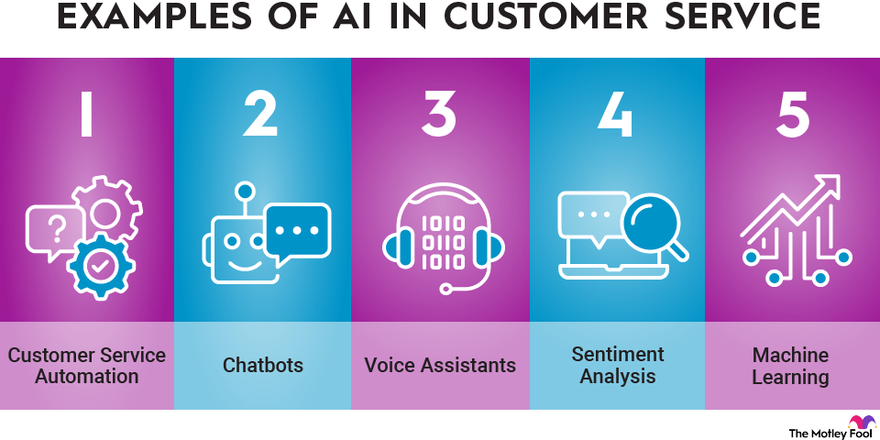
AI-powered chatbots and virtual assistants have become ubiquitous in customer service, providing brands with the ability to offer 24/7 support and personalized interactions. These systems use NLP to understand and respond to customer queries, resolving issues efficiently and reducing the burden on human agents. Brands like Sephora and H&M have integrated AI chatbots into their platforms to assist with product recommendations, order tracking, and returns processing.
Beyond reactive support, AI enables proactive customer engagement through predictive analytics. By analyzing past interactions and purchase behavior, AI systems can anticipate customer needs and suggest relevant products or services. For instance, Amazon’s "Customers who bought this also bought" feature uses AI to recommend complementary products, driving additional sales and enhancing the customer experience. Additionally, AI-driven voice assistants like Amazon Alexa and Google Assistant allow brands to integrate their services into consumers' daily routines, further embedding their identity into the digital ecosystem.
#Important Facts
- Market Growth: The global AI in marketing market is projected to reach USD 107.5 billion by 2028, growing at a compound annual growth rate (CAGR) of 29.6% from 2021 to 2028 (Grand View Research, 2023).
- Consumer Trust: According to a 2023 survey by PwC, 54% of consumers are comfortable with brands using AI to personalize their experiences, but 62% express concerns about data privacy.
- Generative AI Adoption: A 2024 report by McKinsey & Company found that 58% of companies have adopted generative AI in at least one business function, with marketing and sales being the most common areas of application.
- Brand Authenticity: A study by Edelman revealed that 63% of consumers believe brands should disclose when AI is used in content creation, highlighting the importance of transparency in AI-driven branding.
- Cost Savings: Companies using AI for branding report an average cost reduction of 30% in content creation and customer service, according to Forrester Research (2023).
- Ethical Concerns: The use of AI in branding has raised ethical questions about algorithmic bias, with 45% of consumers in a 2024 Accenture survey stating they would avoid brands that use biased AI systems.
#Timeline
- The term 'artificial intellig
The term 'artificial intelligence' is coined at the Dartmouth Conference, marking the formal beginning of AI research.
- Expert systems begin to
Expert systems begin to influence marketing and branding, with companies like IBM and Xerox experimenting with AI-driven customer segmentation.
- Amazon launches its recommenda
[Amazon](# 'Amazon') launches its recommendation algorithm, pioneering AI-driven personalization in e-commerce.
- Google introduces its AI-power
[Google](# 'Google') introduces its AI-powered ad targeting system, revolutionizing digital marketing.
- The rise of deep
The rise of deep learning enables AI to process unstructured data, leading to advancements in image recognition and NLP.
- Microsoft launches Tay, an
[Microsoft](# 'Microsoft') launches [Tay](# 'Microsoft Tay'), an AI chatbot that learns from social media interactions, highlighting both the potential and pitfalls of AI in branding.
- Google Duplex debuts, demonstr
[Google Duplex](# 'Google Duplex') debuts, demonstrating AI's ability to engage in natural, human-like conversations, setting new standards for customer service automation.
- The COVID-19 pandemic accelera
The COVID-19 pandemic accelerates the adoption of AI in branding, as brands seek to maintain customer engagement in a digital-first environment.
- Generative AI models like
Generative AI models like [DALL-E 2](# 'DALL-E 2') and [Stable Diffusion](# 'Stable Diffusion') gain widespread attention, enabling brands to create custom visuals and content autonomously.
- AI-native brands emerge, with
AI-native brands emerge, with companies like [Notion](# 'Notion') and [Retool](# 'Retool') leveraging AI to optimize product development and customer interactions.
- Regulatory scrutiny intensifie
Regulatory scrutiny intensifies as governments begin to address ethical concerns surrounding AI in branding, including data privacy and algorithmic bias.
#Related Terms
#FAQ
What does AI And Branding: Building Identity cover?
Explores how artificial intelligence shapes branding and building identity, covering practical use cases, benefits, limitations, and risks.
Why is AI And Branding: Building Identity important?
It helps readers understand key concepts, compare practical use cases, and evaluate how Business & Marketing decisions affect outcomes, risks, and implementation choices.
What should readers verify before applying this topic?
Readers should compare the benefits, limitations, data requirements, and related themes such as Branding, Building, Identity before using the ideas in real projects.
#References
- AI And Branding: Building Identity terminology and background research
- AI And Branding: Building Identity use cases, implementation examples, and limitations
- Business & Marketing best practices, standards, and risk guidance
- Branding case studies, benchmarks, and current industry analysis



Comments
No comments yet. Start the discussion with a useful note.