


#Short Answer
AI has transformed advertising by enabling data-driven decision-making, reducing manual processes, and improving ROI. Traditional advertising relied on broad demographic targeting and static creative assets, whereas AI-powered advertising leverages real-time data, predictive modeling, and dynamic content generation to deliver hyper-personalized experiences. Key applications include programmatic ad buying, chatbots for customer engagement, and AI-generated ad copy.
#Infobox
#Overview
AI has transformed advertising by enabling data-driven decision-making, reducing manual processes, and improving ROI. Traditional advertising relied on broad demographic targeting and static creative assets, whereas AI-powered advertising leverages real-time data, predictive modeling, and dynamic content generation to deliver hyper-personalized experiences. Key applications include programmatic ad buying, chatbots for customer engagement, and AI-generated ad copy.
The integration of AI in advertising spans multiple channels, including social media, search engines, display networks, and connected TV. Advertisers use AI to optimize budgets, detect fraudulent activities, and measure campaign effectiveness with greater precision. As AI continues to evolve, its role in advertising is expected to expand, with advancements in generative AI enabling more sophisticated ad creatives and interactive experiences.
#Key Components
- Data Collection & Analysis: AI systems gather and process user data from various sources, including browsing history, purchase behavior, and social media interactions.
- Predictive Modeling: Algorithms forecast consumer responses to ads, helping advertisers allocate budgets more effectively.
- Automation: Programmatic advertising platforms use AI to automate ad buying and placement in real time.
- Personalization: AI tailors ad content and recommendations based on individual user preferences and past interactions.
- Fraud Detection: Machine learning identifies and mitigates ad fraud, such as click fraud and bot traffic.
#History / Background
The concept of AI in advertising emerged alongside advancements in computing and data science. Early forms of digital advertising in the 1990s relied on basic algorithms for targeting, but the real transformation began in the 2010s with the rise of big data and machine learning.
In 2012, Google introduced Google AdWords Enhanced Campaigns, which used machine learning to optimize bids across devices. Around the same time, programmatic advertising platforms like The Trade Desk and Google Display & Video 360 gained traction, automating ad buying processes.
The proliferation of smartphones and social media further accelerated AI adoption, as platforms like Facebook and TikTok leveraged user data to deliver highly targeted ads. By the mid-2010s, AI-driven tools for dynamic creative optimization (DCO) and chatbots became mainstream, enabling advertisers to scale personalized campaigns.
In recent years, generative AI has introduced new possibilities, such as AI-generated ad copy, images, and even video content, reducing the need for manual creative production.
#How It Works
AI in advertising operates through a combination of machine learning models, data processing, and automation. The process typically involves several stages:
#Data Gathering
AI systems collect data from multiple touchpoints, including:
- Website interactions (page views, time spent, clicks)
- Purchase history and transaction data
- Social media activity and engagement
- Demographic and geographic information
- Search queries and browsing behavior
This data is processed to create detailed user profiles, which form the basis for targeting and personalization.
#Audience Targeting
AI algorithms segment audiences based on behavior, interests, and predicted intent. Common targeting methods include:
- Lookalike Modeling: Identifying users similar to existing high-value customers.
- Predictive Analytics: Forecasting which users are most likely to convert or engage with an ad.
- Contextual Targeting: Matching ads to content based on keywords or topics.
- Behavioral Targeting: Serving ads based on past online behavior (e.g., retargeting).
#Ad Creation and Optimization
AI enhances ad creation through:
- Dynamic Creative Optimization (DCO): Automatically adjusting ad elements (images, text, colors) based on user data to maximize engagement.
- Generative AI: Creating ad copy, images, or even video content using natural language processing (NLP) and computer vision.
- A/B Testing Automation: Continuously testing different ad variations to determine the most effective combinations.
#Programmatic Ad Buying
Programmatic advertising uses AI to automate the buying and placement of ads in real time through real-time bidding (RTB) auctions. The process involves:
- A user visits a website or app.
- The publisher’s ad server sends an ad request to a supply-side platform (SSP).
- The SSP communicates with demand-side platforms (DSPs) to find the best ad to serve.
- AI algorithms evaluate the user’s profile, the ad’s relevance, and the bid price to determine the winning ad.
- The ad is served within milliseconds, often before the page fully loads.
#Performance Tracking and Attribution
AI-powered analytics tools track ad performance across channels and attribute conversions to specific touchpoints. Key metrics include:
- Click-Through Rate (CTR): The percentage of users who click on an ad.
- Conversion Rate: The percentage of users who complete a desired action (e.g., purchase, sign-up).
- Return on Ad Spend (ROAS): Revenue generated per dollar spent on advertising.
- Customer Lifetime Value (CLV): The predicted long-term value of a customer influenced by ads.
Multi-touch attribution models use AI to assign credit to different ad interactions along the customer journey, providing insights into which channels and creatives drive the most value.
#Important Facts
- AI-driven programmatic advertising accounts for over 80% of digital ad spending in the U.S. as of 2023.
- Personalized ads powered by AI can increase conversion rates by up to 300% compared to non-personalized ads.
- Fraud detection AI can reduce ad fraud losses by up to 90% by identifying invalid traffic patterns.
- The global AI in marketing market is projected to reach $107.5 billion by 2028, growing at a CAGR of 28.5%.
- Generative AI tools like DALL-E and Midjourney are increasingly used to create ad visuals, reducing production costs.
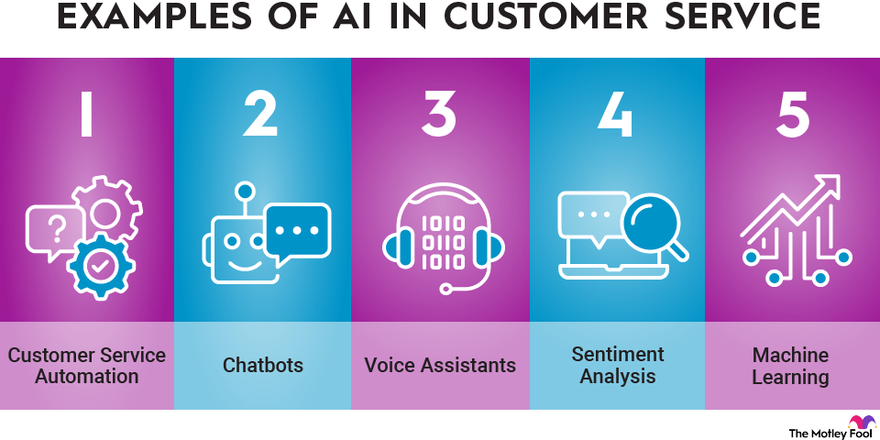
- AI-powered chatbots handle over 80% of customer inquiries in some industries, freeing up human agents for complex issues.
- Voice search optimization, driven by AI, is becoming critical as 50% of all searches are expected to be voice-based by 2025.
#Timeline
- First banner ad is
First banner ad is served by [AT&T](# 'AT&T') on [HotWired](# 'HotWired').
- Google launches Google AdWords
Google launches [Google AdWords](# 'Google AdWords'), introducing keyword-based advertising.
- Facebook launches its self-ser
[Facebook](# 'Facebook') launches its self-serve ad platform, enabling targeted advertising.
- Google introduces Enhanced Cam
Google introduces Enhanced Campaigns, using machine learning for bid optimization.
- The Trade Desk becomes
[The Trade Desk](# 'The Trade Desk') becomes a leading programmatic ad buying platform.
- Programmatic ad spending surpa
Programmatic ad spending surpasses $20 billion in the U.S.
- AI-driven dynamic creative opt
AI-driven dynamic creative optimization (DCO) tools gain widespread adoption.
- Generative AI tools like
Generative AI tools like [GPT-3](# 'GPT-3') enable AI-generated ad copy at scale.
- Meta introduces AI-powered ad
Meta introduces AI-powered ad tools for small businesses, including automated creative generation.
- AI-driven fraud detection beco
AI-driven fraud detection becomes a standard feature in major ad platforms.
- Generative AI for video
Generative AI for video ads (e.g., [Sora](# 'Sora')) begins to enter the market.
#Related Terms
#FAQ
What does AI And Advertising: Creating Campaigns cover?
Explores how artificial intelligence shapes advertising and creating campaigns, covering practical use cases, benefits, limitations, and risks.
Why is AI And Advertising: Creating Campaigns important?
It helps readers understand key concepts, compare practical use cases, and evaluate how Business & Marketing decisions affect outcomes, risks, and implementation choices.
What should readers verify before applying this topic?
Readers should compare the benefits, limitations, data requirements, and related themes such as Advertising, Creating, Campaign before using the ideas in real projects.
#References
- AI And Advertising: Creating Campaigns terminology and background research
- AI And Advertising: Creating Campaigns use cases, implementation examples, and limitations
- Business & Marketing best practices, standards, and risk guidance
- Advertising case studies, benchmarks, and current industry analysis


Comments
No comments yet. Start the discussion with a useful note.