


#Short Answer
Covers advanced AI techniques, including core methods, real-world applications, implementation challenges, and risks for practitioners.
#Infobox
Advanced AI techniques encompass cutting-edge methodologies that enhance machine learning, deep learning, and artificial intelligence systems to solve complex problems with greater efficiency and accuracy. Advanced AI Techniques Field Artificial intelligence Subfields - Machine learning
-
Key Figures - Geoffrey Hinton
-
Notable Applications - Autonomous vehicles
-
Medical diagnosis
-
Fraud detection
-
Natural language understanding
-
Robotics
First Introduced Mid-20th century (with significant advancements in the 21st century)
#Overview
Advanced AI techniques represent the forefront of artificial intelligence research and development, enabling machines to perform tasks that traditionally required human intelligence. These techniques leverage sophisticated algorithms, large-scale data processing, and computational power to achieve unprecedented levels of performance in various domains. From natural language processing to computer vision, advanced AI techniques are transforming industries by automating complex processes, enhancing decision-making, and unlocking new capabilities.
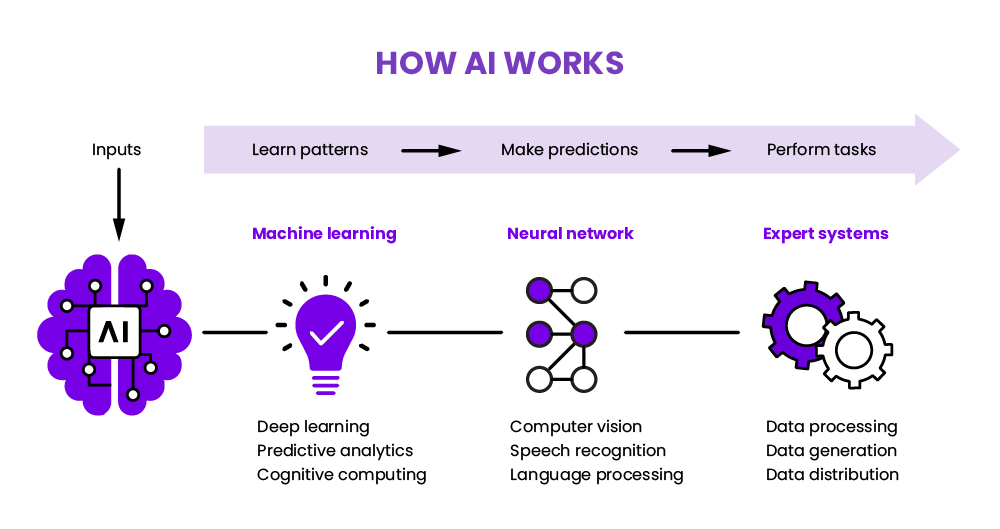
At their core, advanced AI techniques rely on machine learning, a subset of AI that enables systems to learn from data without explicit programming. Within machine learning, deep learning has emerged as a dominant paradigm, utilizing neural networks with multiple layers to model and solve intricate problems. These techniques are further augmented by innovations such as transfer learning, few-shot learning, and generative adversarial networks (GANs), which push the boundaries of what AI systems can achieve.
#History / Background
The evolution of advanced AI techniques can be traced back to the mid-20th century, with foundational work in artificial intelligence by pioneers such as Alan Turing and John McCarthy. The term "artificial intelligence" was coined in 1956 at the Dartmouth Conference, marking the beginning of AI as a formal academic discipline. Early AI systems, however, were limited by computational constraints and lacked the sophisticated algorithms that define modern advanced AI.
The 1980s and 1990s saw significant progress in machine learning, particularly with the development of algorithms like decision trees, support vector machines, and neural networks. However, it was the advent of deep learning in the 2000s that revolutionized the field. Researchers such as Geoffrey Hinton, Yann LeCun, and Andrew Ng pioneered techniques like convolutional neural networks (CNNs) and recurrent neural networks (RNNs), which enabled breakthroughs in image and speech recognition.
The 2010s witnessed an explosion of advanced AI applications, driven by the availability of large datasets, powerful GPUs, and cloud computing. Innovations such as transformers, introduced in the 2017 paper "Attention Is All You Need," revolutionized natural language processing and laid the groundwork for large language models like GPT. Today, advanced AI techniques are integral to industries ranging from healthcare to finance, with ongoing research focused on improving interpretability, efficiency, and generalization.
#How It Works
Advanced AI techniques operate through a combination of algorithms, data, and computational resources. The process typically begins with data collection and preprocessing, where raw data is cleaned, normalized, and structured for training. This data is then fed into machine learning models, which learn patterns and relationships through iterative optimization.
In supervised learning, models are trained on labeled datasets, where input-output pairs guide the learning process. For example, a model trained to recognize objects in images is provided with thousands of labeled images to learn distinguishing features. In contrast, unsupervised learning involves training models on unlabeled data to discover hidden patterns or groupings, such as clustering customer data based on purchasing behavior.
Deep learning techniques, particularly neural networks, are central to advanced AI. These networks consist of interconnected layers of nodes (neurons) that process input data through weighted connections. During training, the model adjusts these weights to minimize errors, a process known as backpropagation. Convolutional neural networks (CNNs) excel in tasks like image recognition by applying filters to detect spatial hierarchies, while recurrent neural networks (RNNs) and their variants, such as LSTMs, are adept at handling sequential data like time series or text.
Advanced techniques such as transfer learning enable models to leverage pre-trained knowledge from one task and apply it to another, reducing the need for extensive training data. Generative adversarial networks (GANs) consist of two competing models—a generator that creates data and a discriminator that evaluates it—driving each other to improve performance. Meanwhile, reinforcement learning trains agents to make decisions through trial and error, receiving rewards for desirable actions, as seen in applications like game-playing AI and robotics.
#Important Facts
- Data Dependency: Advanced AI techniques rely heavily on high-quality, diverse datasets. The performance of models is often limited by the quantity and quality of the data they are trained on.
- Computational Requirements: Training deep learning models requires significant computational power, often necessitating the use of GPUs or specialized hardware like TPUs (Tensor Processing Units).
- Ethical Considerations: AI systems can perpetuate biases present in training data, raising ethical concerns about fairness, accountability, and transparency in decision-making.
- Interpretability: Many advanced AI models, particularly deep neural networks, are often described as "black boxes" due to their complexity, making it challenging to interpret their decisions.
- Generalization: A key challenge in AI is ensuring that models perform well on unseen data, a property known as generalization. Overfitting, where models memorize training data but fail to generalize, is a common issue.
- Real-World Applications: Advanced AI techniques are deployed in diverse fields, including autonomous vehicles (e.g., Tesla's Full Self-Driving), medical imaging (e.g., AI-assisted radiology), and natural language understanding (e.g., chatbots and virtual assistants).
#Timeline
Year Event 1950 Turing test proposed by Alan Turing, laying the groundwork for AI as a field of study. 1956 Dartmouth Conference: The term "artificial intelligence" is coined by John McCarthy. 1967 Frank Rosenblatt develops the perceptron, an early form of neural network. 1986 Geoffrey Hinton, David Rumelhart, and Ronald Williams popularize backpropagation for training neural networks. 1997 IBM's Deep Blue defeats world chess champion Garry Kasparov, showcasing AI's potential in strategic games. 2012 AlexNet, a deep convolutional neural network, wins the ImageNet competition, sparking the deep learning revolution. 2016 AlphaGo, developed by DeepMind, defeats a world champion Go player, demonstrating the power of reinforcement learning. 2017 The Transformer architecture is introduced, revolutionizing natural language processing. 2020 OpenAI releases GPT-3, a large language model with 175 billion parameters, showcasing the capabilities of generative AI. 2022 Stable Diffusion and DALL-E 2 enable high-quality text-to-image generation, expanding the applications of generative AI.
#Related Terms
#FAQ
What does Advanced AI Techniques Explained cover?
Covers advanced AI techniques, including core methods, real-world applications, implementation challenges, and risks for practitioners.
Why is Advanced AI Techniques Explained important?
It helps readers understand key concepts, compare practical use cases, and evaluate how Artificial Intelligence decisions affect outcomes, risks, and implementation choices.
What should readers verify before applying this topic?
Readers should compare the benefits, limitations, data requirements, and related themes such as Advanced, Technique, AI Applications before using the ideas in real projects.
#References
- Advanced AI Techniques Explained terminology and background research
- Advanced AI Techniques Explained use cases, implementation examples, and limitations
- Artificial Intelligence best practices, standards, and risk guidance
- Advanced case studies, benchmarks, and current industry analysis


Comments
No comments yet. Start the discussion with a useful note.