

#Short Answer
Explains What Is AI in Finance, including the core definition, how it works, practical examples, and limitations.
#Infobox
#Overview
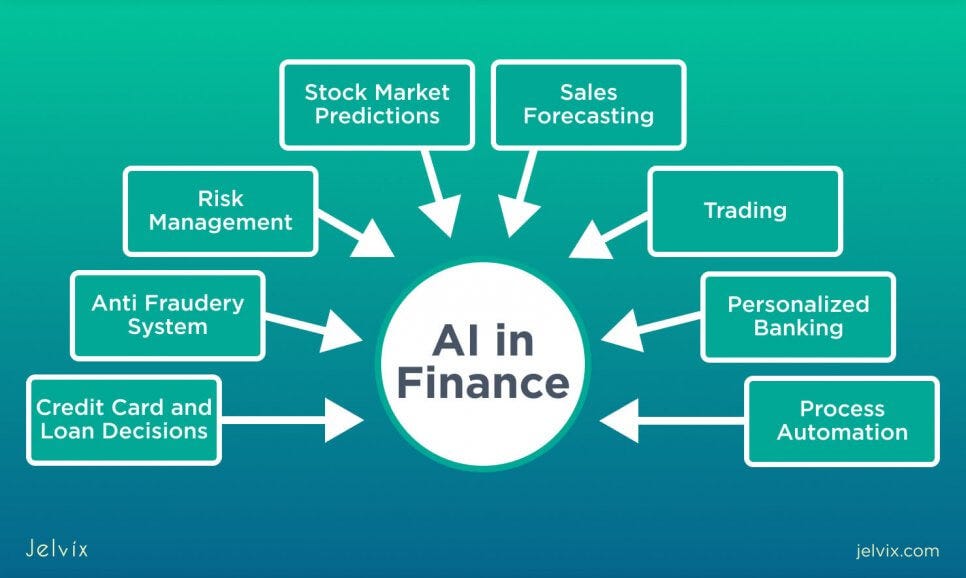
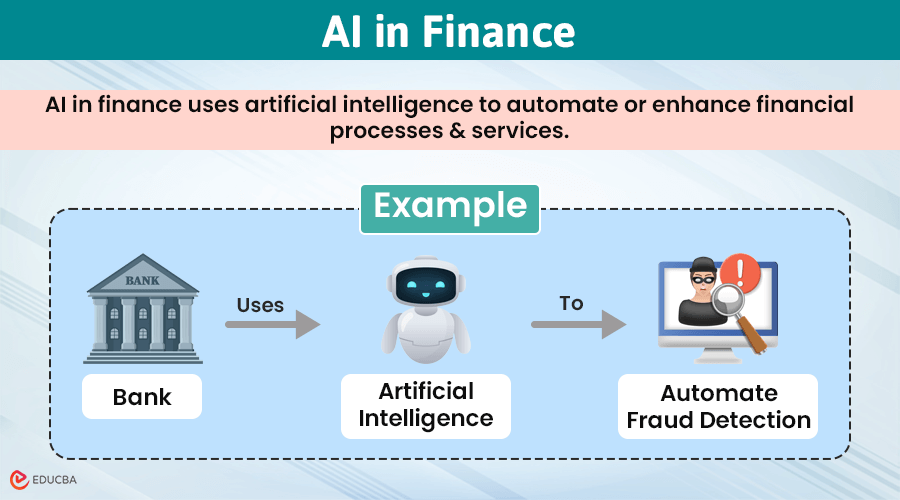
Artificial Intelligence (AI) in finance encompasses the integration of advanced computational techniques to streamline and revolutionize financial operations. Unlike traditional rule-based systems, AI leverages big data analytics, predictive modeling, and autonomous decision-making to address challenges such as volatility, regulatory compliance, and customer expectations. AI applications in finance span multiple domains:
- Retail Banking: Personalized financial advice, chatbots, and automated loan approvals.
- Investment Management: Algorithmic trading, portfolio optimization, and robo-advisors.
- Risk Management: Credit scoring, fraud detection, and stress testing.
- Insurance: Claims processing, underwriting, and dynamic pricing models.
- Fintech: Blockchain integration, peer-to-peer lending, and digital payment systems. The adoption of AI in finance is driven by the need for efficiency, accuracy, and scalability, particularly in an era of digital transformation and increasing regulatory scrutiny.
#History / Background
#Early Developments
(1950s–1980s)
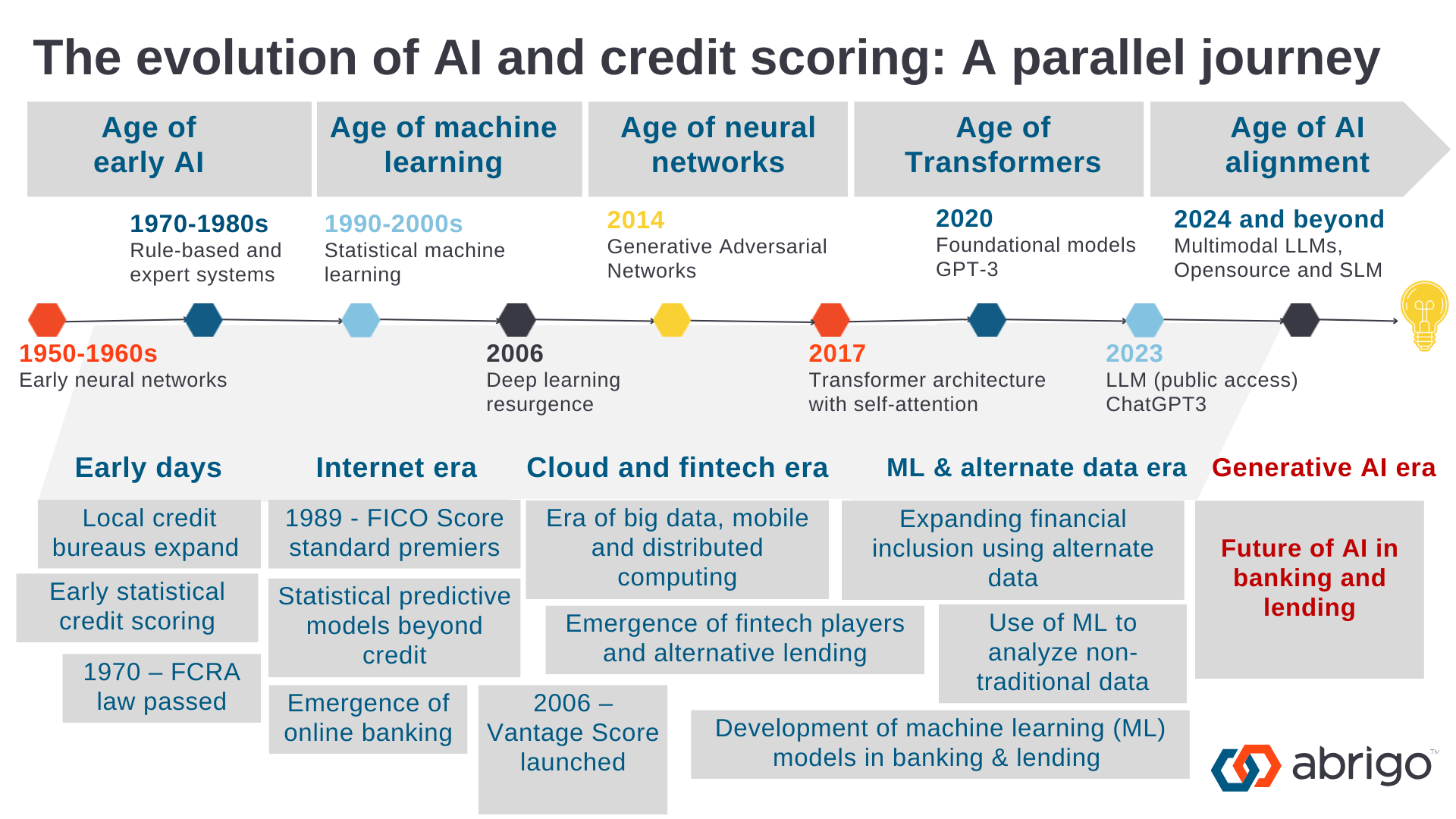
The roots of AI in finance trace back to the 1950s with the advent of early computer systems. The first notable application was automated trading systems in the 1970s, which used basic algorithms to execute trades. By the 1980s, expert systems—rule-based AI programs—were employed in banking for fraud detection and credit risk assessment.
#The Rise of Machine Learning (1990s–2000s)
The 1990s saw the emergence of machine learning (ML), enabling systems to learn from data without explicit programming. Financial institutions began using neural networks for stock market predictions and support vector machines (SVMs) for credit scoring. The 2008 financial crisis accelerated AI adoption, as banks sought better risk management tools.
#The AI Boom (2010s–Present)
The 2010s marked a turning point with the proliferation of big data and cloud computing, allowing AI models to process vast datasets in real time. Key milestones include:
- 2011: IBM’s Watson debuted in financial services for cognitive computing.
- 2014: The launch of robo-advisors (e.g., Betterment, Wealthfront) democratized investment management.
- 2016: Chatbots (e.g., Bank of America’s Erica) became mainstream for customer service.
- 2020s: Generative AI (e.g., LLMs for financial reporting) and quantum computing experiments began reshaping the industry. Today, AI is a cornerstone of fintech innovation, with regulators and institutions increasingly focusing on ethical AI and transparency.
#How It Works
#Core AI Technologies in Finance
- Machine Learning (ML)
- Supervised Learning: Used for credit scoring (e.g., predicting loan defaults) and fraud detection (e.g., identifying anomalous transactions).
- Unsupervised Learning: Applied in customer segmentation and market basket analysis.
- Reinforcement Learning: Powers algorithmic trading by optimizing trade execution strategies.
- Natural Language Processing (NLP) - Analyzes earnings calls, news articles, and social media to gauge market sentiment. - Enables chatbots (e.g., for customer queries) and automated report generation.
- Computer Vision - Used in check processing, document verification, and signature recognition.
- Robotic Process Automation (RPA) - Automates repetitive tasks like data entry, reconciliation, and compliance reporting.
- Deep Learning
- Recurrent Neural Networks (RNNs) and Transformers analyze time-series data (e.g., stock prices).
- Generative Adversarial Networks (GANs) simulate financial scenarios for stress testing.
#AI Workflow in Financial Services
- Data Collection: Gathering structured (transaction logs) and unstructured (emails, call transcripts) data.
- Data Preprocessing: Cleaning, normalizing, and augmenting data for model training.
- Model Training: Using ML algorithms to identify patterns (e.g., predicting stock trends).
- Validation & Testing: Backtesting models to ensure accuracy and robustness.
- Deployment: Integrating AI systems into existing workflows (e.g., trading platforms, CRM tools).
- Monitoring & Feedback: Continuously updating models to adapt to market changes.
#Key AI Models in Finance
| Model | Use Case | Example | |-------------------------|---------------------------------------|--------------------------------------| | Random Forest | Credit risk assessment | Predicting loan default probabilities | | LSTM Networks | Time-series forecasting | Stock price prediction | | BERT (NLP) | Sentiment analysis | Analyzing Fed policy statements | | Q-Learning | Algorithmic trading | Optimizing trade execution | | Autoencoders | Anomaly detection | Fraud detection in transactions |
#Important Facts
- Fraud Detection: AI reduces false positives in fraud detection by up to 50% compared to traditional methods (McKinsey, 2022).
- Algorithmic Trading: Over 80% of stock market trades are now executed by AI-driven algorithms (JPMorgan, 2023).
- Cost Savings: Banks using AI for customer service report 30–50% reductions in operational costs (Deloitte, 2021).
- Regulatory Compliance: AI helps institutions comply with AML (Anti-Money Laundering) and KYC (Know Your Customer) regulations by automating identity verification.
- Personalization: AI-driven robo-advisors manage over $1 trillion in assets globally (Statista, 2023).
- Bias in AI: Studies show that AI credit scoring models can inherit biases from historical data, leading to discriminatory lending practices (Brookings Institution, 2020).
- Quantum AI: Early experiments in quantum computing (e.g., by Goldman Sachs) suggest potential for portfolio optimization and risk modeling at unprecedented speeds.
#Timeline
- Foundational ideas
Core concepts and early methods shape What Is AI in Finance?.
- Practical use
Tools, examples, and real-world deployments make the topic easier to evaluate.
- Responsible implementation
Current work focuses on reliability, governance, performance, and measurable impact.
#Related Terms
#FAQ
What does What Is AI in Finance? cover?
Explains What Is AI in Finance, including the core definition, how it works, practical examples, and limitations.
Why is What Is AI in Finance? important?
It helps readers understand key concepts, compare practical use cases, and evaluate how Business & Marketing decisions affect outcomes, risks, and implementation choices.
What should readers verify before applying this topic?
Readers should compare benefits, limitations, data requirements, and related themes such as AI, Finance, Machine Learning before using the ideas in real projects.
#References
- What Is AI in Finance? terminology and background research
- What Is AI in Finance? use cases, implementation examples, and limitations
- Business & Marketing best practices, standards, and risk guidance
- AI case studies, benchmarks, and current industry analysis


Comments
No comments yet. Start the discussion with a useful note.