

#Short Answer
Covers nlp for beginners: a friendly introduction, including core concepts, practical examples, benefits, limitations, and risks in Language AI.
#Infobox
#Overview
Natural Language Processing (NLP) bridges the gap between human communication and computer understanding. It allows machines to process, analyze, and generate human language in a way that feels natural and intuitive. NLP is a multidisciplinary field, drawing from linguistics, computer science, and artificial intelligence to create systems that can interpret text and speech with high accuracy. At its core, NLP aims to enable computers to perform tasks such as:
- Language Translation: Converting text or speech from one language to another (e.g., Google Translate).
- Sentiment Analysis: Determining the emotional tone behind a piece of text (e.g., analyzing customer reviews).
- Text Summarization: Condensing long documents into concise summaries.
- Speech Recognition: Converting spoken language into written text (e.g., voice assistants like Siri or Alexa).
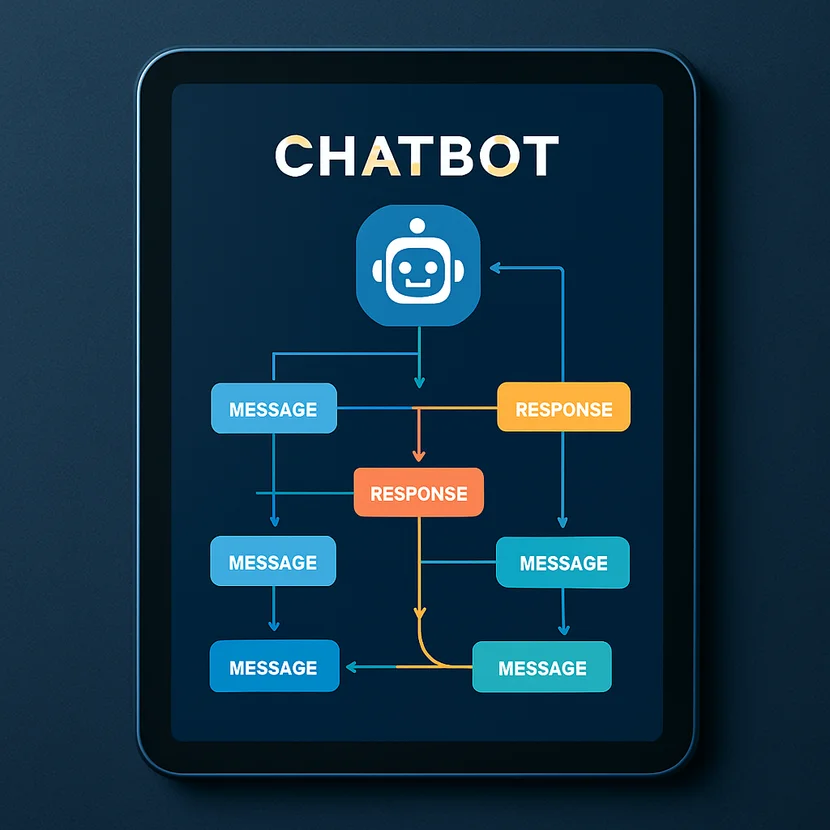
- Chatbots and Virtual Assistants: Engaging in human-like conversations to provide information or perform tasks. NLP is divided into two main approaches:
- Rule-Based NLP: Uses predefined linguistic rules to process language (e.g., regular expressions, grammar rules).
- Statistical and Machine Learning NLP: Leverages large datasets and algorithms to learn patterns in language (e.g., neural networks, transformers).
#History / Background
The history of NLP dates back to the mid-20th century, evolving from simple rule-based systems to sophisticated deep learning models.
#Early Developments
(1950s–1960s)
- 1950: Alan Turing proposed the Turing Test, a benchmark for machine intelligence, which laid the groundwork for NLP by questioning whether machines could exhibit human-like language understanding.
- 1954: The Georgetown-IBM experiment demonstrated the first machine translation system, translating Russian sentences into English using a limited set of linguistic rules.
- 1960s: Early chatbots like ELIZA (1966) were developed, simulating human conversation by using pattern-matching techniques. ELIZA could mimic a psychotherapist by rephrasing user inputs.
#Rule-Based and Statistical Era (1970s–1990s)
- 1970s–1980s: Rule-based systems dominated, relying on handcrafted linguistic rules. Projects like SHRDLU (1970) demonstrated how computers could understand and manipulate language in constrained environments.
- 1990s: Statistical methods gained traction, using probabilistic models to analyze language patterns. The introduction of n-gram models and Hidden Markov Models (HMMs) improved speech recognition and text processing.
#Machine Learning and Deep Learning Revolution (2000s–Present)
- 2000s: The rise of machine learning allowed NLP systems to learn from data rather than rely solely on rules. Techniques like Support Vector Machines (SVMs) and Naive Bayes classifiers were widely used.
- 2010s: Deep learning transformed NLP with the introduction of recurrent neural networks (RNNs) and long short-term memory (LSTM) networks, enabling better handling of sequential data like text.
- 2017: The Transformer architecture was introduced in the paper "Attention Is All You Need", revolutionizing NLP by allowing models to process entire sentences simultaneously rather than sequentially. This led to the development of models like BERT (Bidirectional Encoder Representations from Transformers) and GPT (Generative Pre-trained Transformer).
- 2020s: Large language models (LLMs) like GPT-3, GPT-4, and PaLM have pushed the boundaries of NLP, enabling human-like text generation, advanced question-answering, and creative writing.
#How It Works
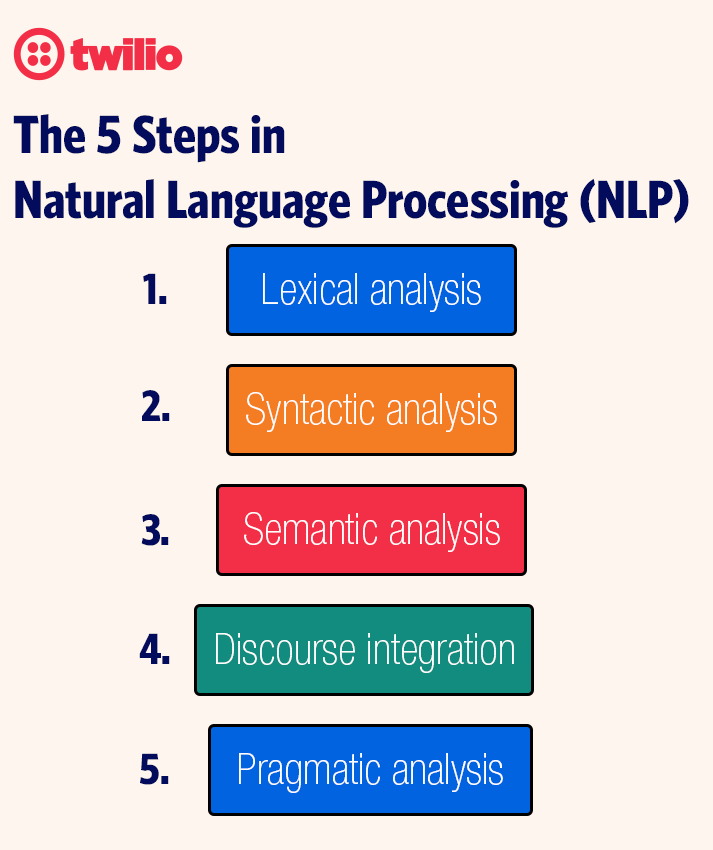
NLP systems process language through a series of steps, combining computational techniques with linguistic principles. The process can be broken down into several key stages:
#1. Text Preprocessing Before analysis, raw text must be cleaned and structured:
- Tokenization: Splitting text into individual words or sentences (e.g., "Hello world" → ["Hello", "world"]).
- Normalization: Converting text to a standard format (e.g., lowercase conversion, removing punctuation, expanding contractions like "don't" → "do not").
- Stop Word Removal: Filtering out common words (e.g., "the", "is") that add little meaning.
- Stemming/Lemmatization: Reducing words to their base or root form (e.g., "running" → "run", "better" → "good").
#2. Syntactic Analysis This stage focuses on the grammatical structure of sentences:
- Part-of-Speech (POS) Tagging: Identifying the grammatical role of each word (e.g., noun, verb, adjective).
- Parsing: Analyzing the syntactic structure of a sentence to determine relationships between words (e.g., subject-verb-object).
- Dependency Parsing: Mapping out the grammatical dependencies between words (e.g., identifying which words modify others).
#3. Semantic Analysis This involves understanding the meaning of text:
- Named Entity Recognition (NER): Identifying and classifying named entities in text (e.g., people, organizations, locations).
- Word Sense Disambiguation: Determining the correct meaning of ambiguous words (e.g., "bank" as a financial institution vs. a riverbank).
- Sentiment Analysis: Classifying the emotional tone of text (e.g., positive, negative, neutral).
#4. Pragmatic Analysis This stage considers the context and intent behind language:
- Coreference Resolution: Identifying when different words refer to the same entity (e.g., "John" and "he" in a sentence).
- Discourse Analysis: Understanding the flow and structure of conversations or documents.
- Intent Recognition: Determining the user's goal in a query (e.g., asking a chatbot for the weather vs. setting a reminder).
#5. Generation (for Output Systems)
For systems that produce language (e.g., chatbots, translation tools):
- Text Generation: Creating coherent and contextually appropriate responses.
- Machine Translation: Converting text from one language to another while preserving meaning.
- Summarization: Condensing long texts into shorter versions while retaining key information.
#Key Techniques
and Models
- Bag-of-Words (BoW): Represents text as the count of words, ignoring grammar and word order.
- TF-IDF (Term Frequency-Inverse Document Frequency): Weighs words by their importance in a document relative to a corpus.
- Word Embeddings: Representing words as dense vectors in a continuous space (e.g., Word2Vec, GloVe).
- Recurrent Neural Networks (RNNs): Process sequential data, making them suitable for tasks like language modeling.
- Transformers: Use self-attention mechanisms to process entire sentences at once, enabling parallelization and better context understanding (e.g., BERT, GPT).
#Important Facts
- NLP is Everywhere: From autocorrect on smartphones to voice assistants like Siri and Alexa, NLP is integrated into daily technologies.
- Multilingual NLP: Modern NLP systems can process and translate between hundreds of languages, though performance varies by language complexity.
- Bias in NLP: Language models can inherit biases from training data, leading to skewed or unfair outputs (e.g., gender or racial biases in sentiment analysis).
- Ethical Concerns: NLP raises ethical issues such as privacy (e.g., analyzing personal communications), misinformation (e.g., deepfake text), and job displacement (e.g., automated content creation).
- Performance Metrics: Common metrics for evaluating NLP models include accuracy, precision, recall, F1-score, and BLEU score (for translation tasks).
- Computational Cost: Training large language models requires significant computational resources, often necessitating specialized hardware like GPUs or TPUs.
- Real-World Applications:
- Healthcare: Analyzing medical records to assist in diagnosis or drug discovery.
- Finance: Processing earnings reports or news articles to predict market trends.
- Customer Service: Deploying chatbots to handle routine inquiries and reduce human workload.
#Timeline
- Foundational ideas
Core concepts and early methods shape NLP for Beginners: a Friendly Introduction.
- Practical use
Tools, examples, and real-world deployments make the topic easier to evaluate.
- Responsible implementation
Current work focuses on reliability, governance, performance, and measurable impact.
#Related Terms
#FAQ
What does NLP for Beginners: a Friendly Introduction cover?
Covers nlp for beginners: a friendly introduction, including core concepts, practical examples, benefits, limitations, and risks in Language AI.
Why is NLP for Beginners: a Friendly Introduction important?
It helps readers understand key concepts, compare practical use cases, and evaluate how Language AI decisions affect outcomes, risks, and implementation choices.
What should readers verify before applying this topic?
Readers should compare benefits, limitations, data requirements, and related themes such as NLP, AI, Machine Learning before using the ideas in real projects.
#References
- NLP for Beginners: a Friendly Introduction terminology and background research
- NLP for Beginners: a Friendly Introduction use cases, implementation examples, and limitations
- Language AI best practices, standards, and risk guidance
- NLP case studies, benchmarks, and current industry analysis


Comments
No comments yet. Start the discussion with a useful note.