

#Short Answer
Explains how do ai platforms work?, including the main process, tools, examples, risks, and practical implementation steps.
#Infobox
#Overview
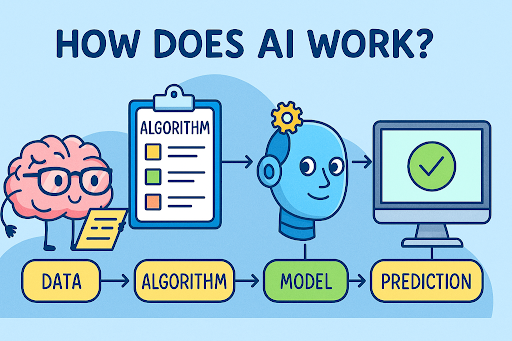
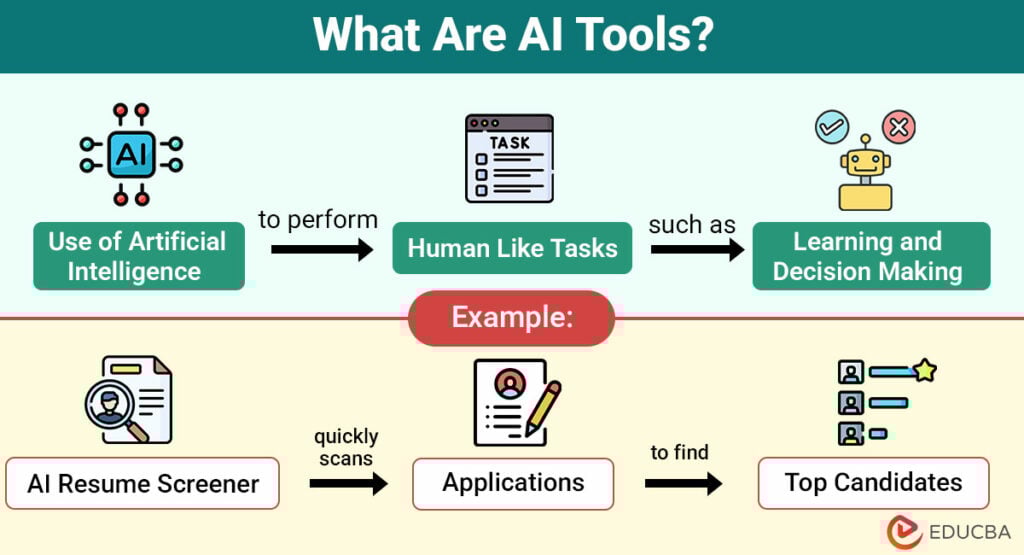
AI platforms represent the foundational infrastructure that powers modern artificial intelligence applications. Unlike standalone AI models, these platforms provide end-to-end environments for developing, training, deploying, and managing AI systems at scale. They abstract the complexity of underlying algorithms, allowing developers, data scientists, and businesses to focus on solving domain-specific problems. At their core, AI platforms consist of several interconnected components:
- Data Pipelines: Tools for collecting, cleaning, labeling, and storing data.
- Model Development: Frameworks and libraries for building and training AI models.
- Training Infrastructure: High-performance computing resources (e.g., GPUs, TPUs) for model optimization.
- Deployment Services: APIs, microservices, and edge computing support for integrating AI into applications.
- Monitoring and Governance: Tools for tracking model performance, detecting bias, ensuring compliance, and managing lifecycle. These platforms democratize AI by lowering the barrier to entry, enabling organizations of all sizes to leverage intelligent automation without requiring deep expertise in machine learning.
#History / Background
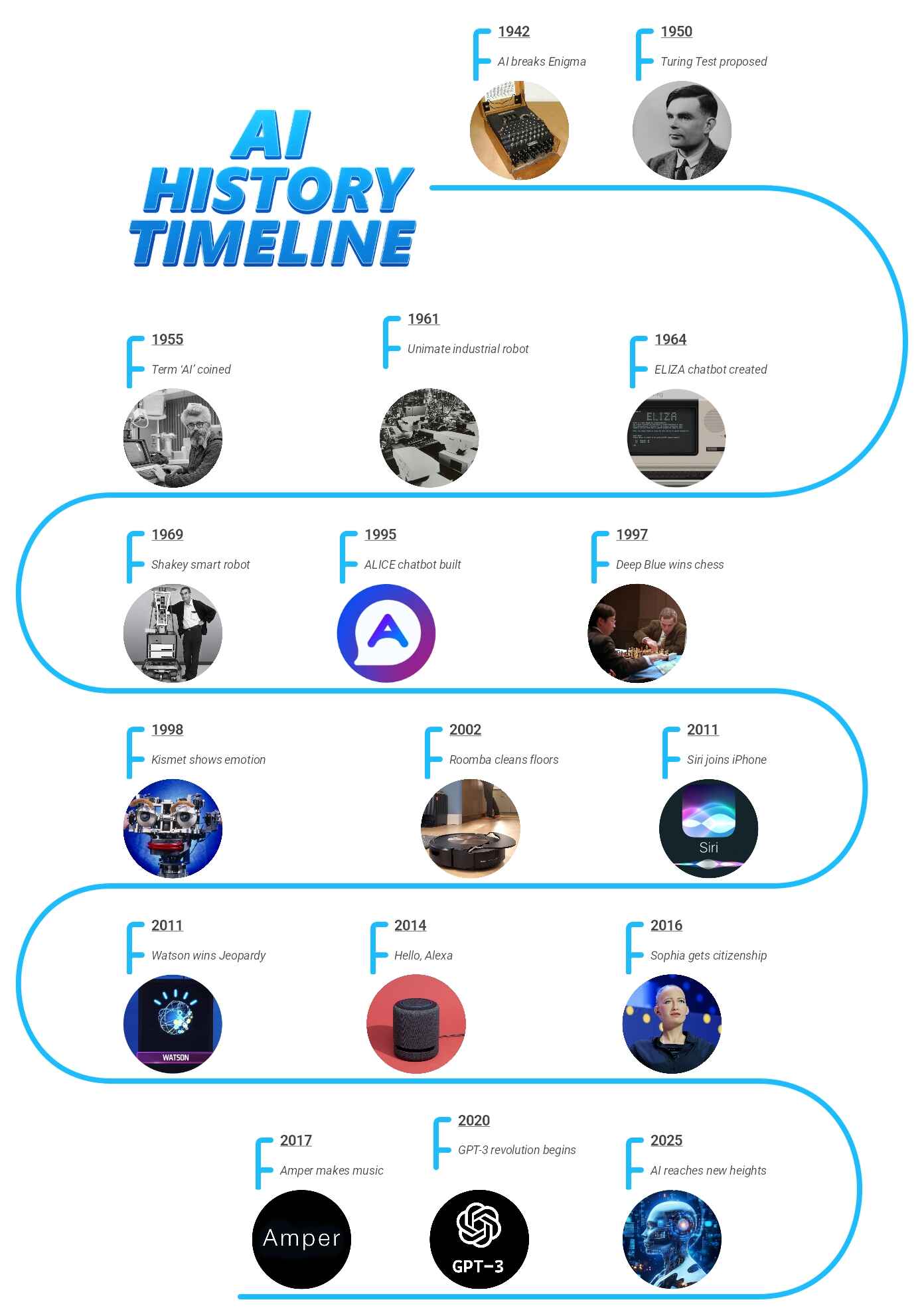
The evolution of AI platforms is deeply intertwined with the broader history of artificial intelligence and computing.
#Early Foundations (1950s–1980s)
The concept of AI dates back to the 1950s, with early work on symbolic reasoning and rule-based systems. However, AI platforms as we know them did not exist. Research was largely academic, focused on symbolic logic and expert systems like DENDRAL and MYCIN.
#The AI Winter and Expert Systems (1980s–1990s)
During the "AI winter," interest in AI declined due to unmet expectations. However, expert systems—rule-based AI applications—gained traction in industries like healthcare and finance. These systems laid groundwork for structured decision-making but lacked scalability and adaptability.
#The Rise of Machine Learning (2000s)
The resurgence of AI began with breakthroughs in machine learning, particularly in supervised learning and neural networks. The availability of large datasets (e.g., ImageNet) and advances in computational power enabled training of complex models. Open-source frameworks like TensorFlow (2015) and PyTorch (2016) emerged, providing developers with tools to build and share AI models.
#Cloud and AI-as-a-Service (2010s–Present)
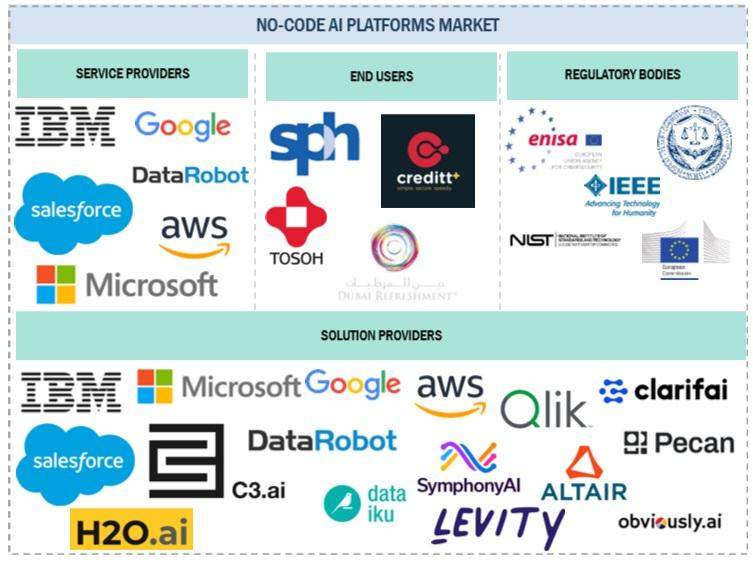
The proliferation of cloud computing transformed AI platforms into scalable, on-demand services. Major technology companies launched AI platforms:
- Google Cloud AI (2016): Integrated AI services including Vision, Natural Language, and AutoML.
- Microsoft Azure AI (2017): Offered cognitive services and machine learning tools.
- IBM Watson (2011): Initially focused on question-answering, later expanded into enterprise AI.
- Amazon SageMaker (2017): Provided end-to-end machine learning workflows. These platforms enabled businesses to integrate AI without building infrastructure from scratch, accelerating adoption across sectors.
#Modern Era: Democratization and Ethical AI Today, AI platforms emphasize accessibility, scalability, and governance. Features like AutoML, explainable AI (XAI), and AI ethics toolkits reflect growing concerns over transparency, fairness, and accountability. The rise of generative AI—powered by large language models (LLMs)—has further expanded the capabilities of AI platforms, enabling content creation, code generation, and conversational interfaces.
#How It Works
AI platforms operate through a structured workflow that transforms raw data into intelligent actions. This process can be broken down into several key stages:
#
- Data Ingestion and Preprocessing AI platforms begin with data ingestion, where structured and unstructured data is collected from various sources (databases, APIs, IoT devices, logs). This data may include: - Text (emails, documents, social media) - Images and videos (medical scans, surveillance footage) - Audio (voice commands, call center recordings) - Sensor data (temperature, motion, GPS) Preprocessing is essential to clean and standardize data. Common techniques include:
- Normalization: Scaling numerical data to a consistent range.
- Tokenization: Breaking text into words or subwords.
- Noise Reduction: Removing irrelevant data (e.g., background noise in audio).
- Labeling: Assigning ground-truth labels for supervised learning. AI platforms often include data labeling tools (e.g., Amazon SageMaker Ground Truth) to streamline this process, especially for supervised learning tasks.
#
- Model Development and Training Once data is prepared, models are developed using machine learning or deep learning techniques.
Machine Learning Models
- Supervised Learning: Models learn from labeled data (e.g., spam detection, image classification).
- Unsupervised Learning: Models identify patterns in unlabeled data (e.g., customer segmentation, anomaly detection).
- Reinforcement Learning: Models learn by interacting with an environment and receiving rewards (e.g., robotics, game AI).
Deep Learning Models
- Neural Networks: Composed of layers of interconnected nodes (neurons), capable of learning hierarchical features.
- Convolutional Neural Networks (CNNs): Used for image and video analysis.
- Recurrent Neural Networks (RNNs): Used for sequential data like text or time series.
- Transformers: Power modern NLP models (e.g., BERT, GPT) by capturing long-range dependencies in text. AI platforms provide pre-built models (e.g., ResNet for image recognition, BERT for text) and AutoML tools that automate model selection, hyperparameter tuning, and training.
Training Infrastructure Training large models requires significant computational resources. AI platforms leverage:
- GPUs (Graphics Processing Units): Accelerate matrix operations in neural networks.
- TPUs (Tensor Processing Units): Google’s custom hardware optimized for deep learning.
- Distributed Training: Splitting training across multiple machines to reduce time. Cloud-based AI platforms (e.g., AWS SageMaker, Google Vertex AI) offer managed training services, abstracting infrastructure management.
#
- Model Evaluation and Optimization After training, models undergo evaluation to assess performance using metrics such as:
- Accuracy: Percentage of correct predictions.
- Precision and Recall: For classification tasks (e.g., spam detection).
- F1-Score: Harmonic mean of precision and recall.
- Mean Squared Error (MSE): For regression tasks.
- BLEU Score: For machine translation. AI platforms include validation tools to detect overfitting (when a model performs well on training data but poorly on unseen data) and underfitting (when a model is too simple to capture patterns). Hyperparameter tuning (e.g., learning rate, batch size) is automated through techniques like grid search or Bayesian optimization, often integrated into platforms.
#
- Deployment and Integration Once validated, models are deployed into production environments. AI platforms support multiple deployment strategies:
- API-Based Deployment: Models are exposed as RESTful APIs for real-time inference (e.g., chatbots, recommendation systems).
- Edge Deployment: Models are optimized and deployed on edge devices (e.g., smartphones, IoT sensors) for low-latency processing.
- Batch Inference: Models process large datasets in batches (e.g., nightly fraud detection).
- Hybrid Deployment: Combines cloud and edge computing for scalability and performance. Platforms like Azure AI and Google AI Platform provide model serving tools that handle scaling, load balancing, and versioning.
#
- Monitoring, Maintenance, and Governance AI models degrade over time due to data drift (changes in input data distribution) or concept drift (changes in the relationship between input and output). AI platforms include monitoring tools to: - Track model performance in real time. - Detect anomalies or biases. - Log predictions and inputs for auditing. - Trigger retraining when performance degrades. Explainability is a critical feature, especially in regulated industries. Tools like SHAP (SHapley Additive exPlanations) and LIME (Local Interpretable Model-agnostic Explanations) help interpret model decisions. Compliance and governance features ensure adherence to regulations like GDPR, HIPAA, and AI ethics guidelines (e.g., EU AI Act). Platforms may include bias detection, data privacy controls, and audit trails.
#
- Continuous Learning and Feedback Loops Advanced AI platforms support continuous learning, where models improve over time through feedback:
- Human-in-the-loop (HITL): Experts review and correct model predictions, feeding new labeled data back into the system.
- Active Learning: The model selects the most informative data points for labeling, reducing annotation costs.
- Federated Learning: Models are trained across decentralized devices (e.g., smartphones) without sharing raw data, preserving privacy.
#Important Facts
- AI platforms reduce the time to deploy AI models from months to days, thanks to automation and cloud infrastructure.
- Over 70% of enterprises use AI platforms for at least one application, according to Gartner (2023).
- Generative AI models (e.g., LLMs, diffusion models) are now commonly integrated into AI platforms, enabling content creation, code generation, and synthetic data generation.
- AI platforms are estimated to contribute $15.7 trillion to the global economy by 2030 (PwC).
- Bias in AI models is a critical challenge; platforms increasingly include fairness assessment tools to mitigate discrimination.
- The global AI platform market is projected to reach $126 billion by 2027 (MarketsandMarkets).
- Edge AI is growing rapidly, with platforms like NVIDIA Jetson and TensorFlow Lite enabling AI on low-power devices.
- AI platforms support multi-cloud and hybrid deployments, allowing organizations to avoid vendor lock-in.
#Timeline
- Foundational ideas
Core concepts and early methods shape How Do AI Platforms Work?.
- Practical use
Tools, examples, and real-world deployments make the topic easier to evaluate.
- Responsible implementation
Current work focuses on reliability, governance, performance, and measurable impact.
#Related Terms
#FAQ
What does How Do AI Platforms Work? cover?
Explains how do ai platforms work?, including the main process, tools, examples, risks, and practical implementation steps.
Why is How Do AI Platforms Work? important?
It helps readers understand key concepts, compare practical use cases, and evaluate how AI Tools decisions affect outcomes, risks, and implementation choices.
What should readers verify before applying this topic?
Readers should compare benefits, limitations, data requirements, and related themes such as Do, AI, Platforms before using the ideas in real projects.
#References
- How Do AI Platforms Work? terminology and background research
- How Do AI Platforms Work? use cases, implementation examples, and limitations
- AI Tools best practices, standards, and risk guidance
- Do case studies, benchmarks, and current industry analysis

Comments
No comments yet. Start the discussion with a useful note.