

#Short Answer
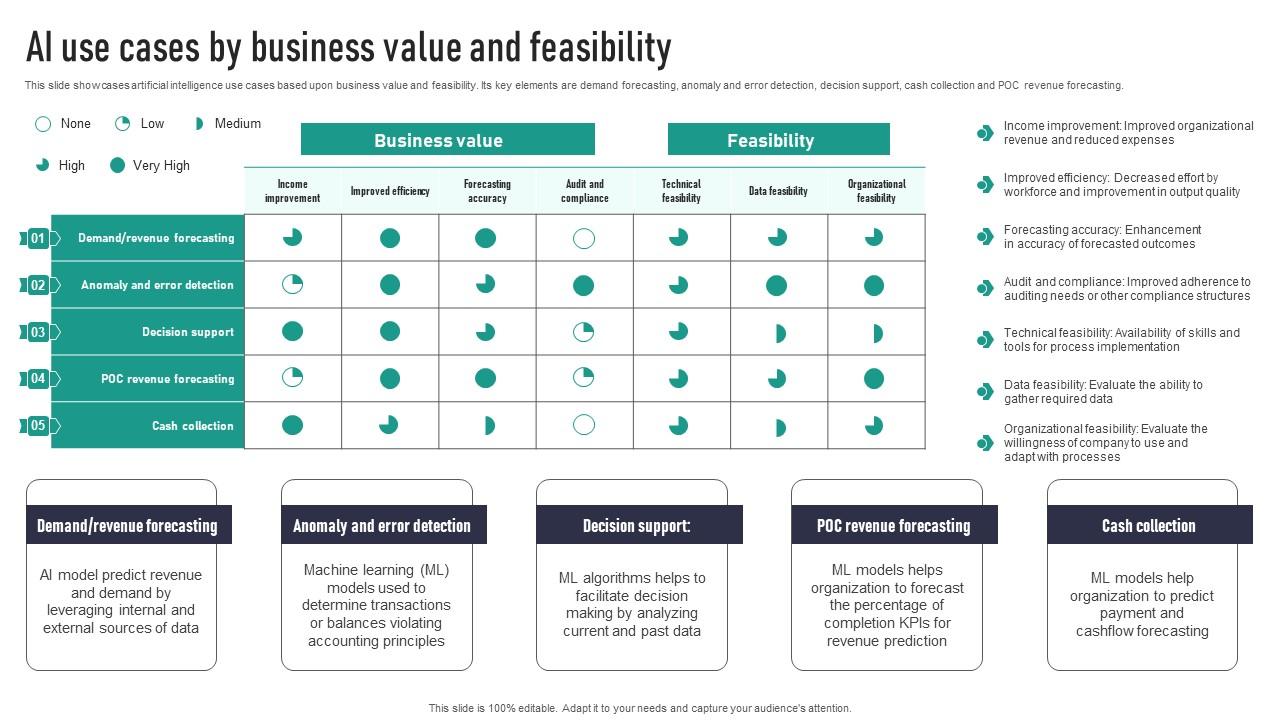
Explains how businesses use ai: case studies, including the main process, tools, examples, risks, and practical implementation steps.
#Infobox
#Overview
Artificial Intelligence (AI) has evolved from a theoretical concept to a cornerstone of modern business strategy. By integrating AI technologies, organizations can analyze vast datasets, predict trends, and automate complex tasks. The adoption of AI spans industries, from healthcare and finance to manufacturing and retail, enabling businesses to enhance productivity, reduce costs, and deliver superior customer experiences. AI applications in business are categorized into several domains:
- Predictive Analytics: Forecasting market trends, customer behavior, and operational risks.
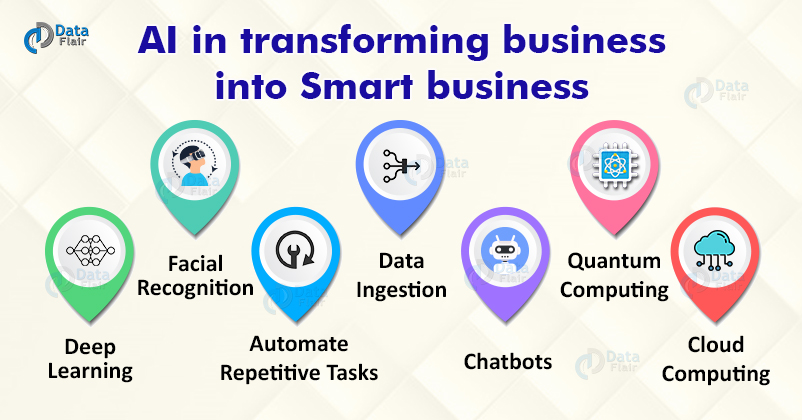
- Natural Language Processing (NLP): Powering chatbots, sentiment analysis, and language translation.
- Computer Vision: Enabling quality control in manufacturing, autonomous vehicles, and facial recognition.
- Robotic Process Automation (RPA): Streamlining repetitive tasks such as data entry and invoice processing.
- Recommendation Systems: Personalizing product suggestions for e-commerce and streaming platforms. The integration of AI into business processes is not merely a technological upgrade but a strategic imperative. Companies that fail to adopt AI risk falling behind competitors who leverage data-driven insights to innovate and optimize their operations.
#History / Background
The journey of AI in business began in the mid-20th century, with early experiments in machine learning and expert systems. However, it was not until the 21st century that AI gained significant traction due to advancements in computing power, big data, and algorithmic innovations.
#Early Developments
(1950s–1980s)
- 1956: The term "Artificial Intelligence" was coined at the Dartmouth Conference, marking the birth of AI as a field of study.
- 1960s–1970s: Early AI systems, such as ELIZA (a natural language processing program), demonstrated the potential of AI in human-computer interaction.
- 1980s: Expert systems gained popularity, enabling businesses to automate decision-making in domains like finance and healthcare.
#The AI Winter and Revival (1990s–2000s)
- 1990s: The AI "winter" occurred due to overhyped expectations and limited computational resources. Funding and research declined.
- Late 1990s–2000s: Revival began with breakthroughs in machine learning, particularly in neural networks and support vector machines. Companies like Google and Amazon started leveraging AI for search algorithms and recommendation systems.
#The Modern AI Boom (2010s–Present)
- 2010s: The proliferation of big data, cloud computing, and deep learning fueled AI adoption. Businesses began integrating AI into core operations.
- 2016: The launch of AlphaGo by DeepMind showcased AI’s ability to outperform humans in complex tasks, sparking global interest.
- 2020s: Generative AI, such as large language models (LLMs) and image generators, revolutionized content creation, customer service, and product development. AI became a mainstream tool for businesses of all sizes.
#How It Works
AI in business operates through a combination of algorithms, data, and computational power. The process can be broken down into several key stages:
#1. Data Collection and Preprocessing AI systems rely on high-quality data to function effectively. Businesses gather data from various sources, including: - Customer interactions (e.g., purchase history, support tickets) - Operational metrics (e.g., production rates, inventory levels) - External sources (e.g., market trends, social media sentiment) Data preprocessing involves cleaning, normalizing, and structuring raw data to make it suitable for AI models. Techniques like data augmentation and feature engineering enhance the dataset’s utility.
#2. Model Selection and Training Businesses choose AI models based on their specific needs:
- Supervised Learning: Used for classification and regression tasks (e.g., fraud detection, demand forecasting). Models are trained on labeled data.
- Unsupervised Learning: Identifies patterns in unlabeled data (e.g., customer segmentation, anomaly detection).
- Reinforcement Learning: Optimizes decision-making through trial and error (e.g., dynamic pricing, robotics).
- Deep Learning: Leverages neural networks for complex tasks like image recognition and natural language understanding. Training involves feeding data into the model, adjusting parameters to minimize errors, and validating performance using metrics like accuracy, precision, and recall.
#3. Deployment and Integration Once trained, AI models are deployed into business systems. Integration methods include:
- APIs: Allowing third-party applications to interact with AI models (e.g., chatbots, recommendation engines).
- Embedded Systems: AI is integrated directly into software or hardware (e.g., autonomous vehicles, smart manufacturing).
- Cloud Platforms: Businesses use cloud-based AI services (e.g., AWS SageMaker, Google Vertex AI) for scalability and flexibility.
#4. Monitoring and Optimization AI systems require continuous monitoring to ensure accuracy and relevance. Businesses use:
- Feedback Loops: Collecting user feedback to refine models.
- A/B Testing: Comparing different AI-driven strategies to identify the most effective approach.
- Explainability Tools: Techniques like SHAP (SHapley Additive exPlanations) to interpret AI decisions and ensure transparency.
#5. Scaling and Expansion Successful AI implementations are scaled across the organization. Businesses may: - Expand AI use cases (e.g., from customer service chatbots to predictive maintenance). - Adopt hybrid AI-human workflows to enhance collaboration. - Invest in upskilling employees to work alongside AI systems.
#Important Facts
- Cost Savings: AI can reduce operational costs by up to 30% in industries like manufacturing and logistics through automation and predictive maintenance.
- Revenue Growth: Companies using AI for customer personalization report a 10–25% increase in sales.
- Customer Experience: AI-powered chatbots resolve 69% of customer queries without human intervention.
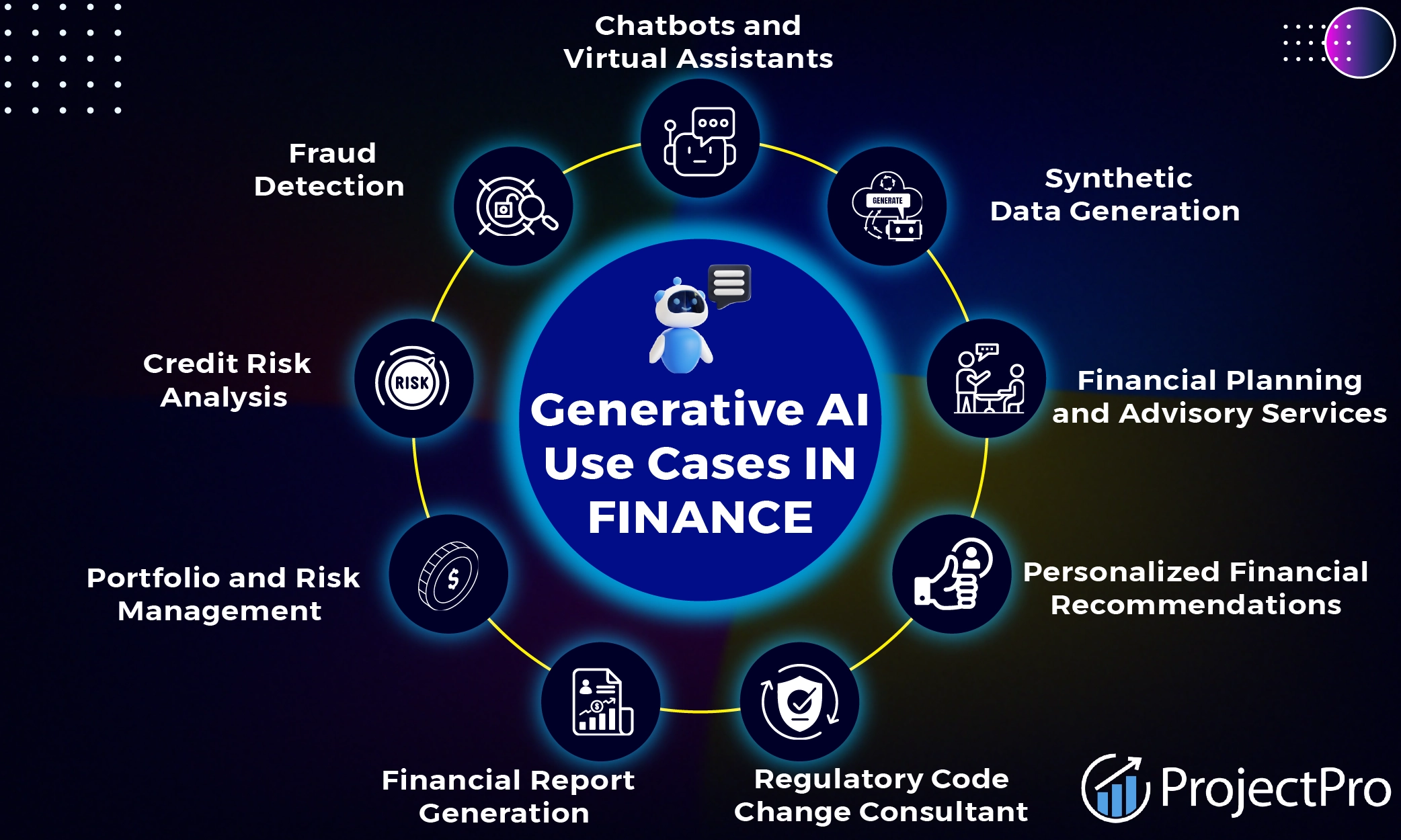
- Fraud Detection: Financial institutions using AI detect fraudulent transactions 90% faster than traditional methods.
- Supply Chain Efficiency: AI optimizes logistics routes, reducing delivery times by 20–30%.
- Job Transformation: While AI automates repetitive tasks, it also creates new roles such as AI trainers, data annotators, and ethics compliance officers.
- Ethical Concerns: Bias in AI algorithms can lead to discriminatory outcomes, prompting businesses to adopt fairness-aware AI practices.
- Regulatory Compliance: Governments are introducing AI-specific regulations (e.g., EU AI Act, U.S. Algorithmic Accountability Act) to ensure responsible AI use.
#Timeline
- Foundational ideas
Core concepts and early methods shape How Businesses Use AI: Case Studies.
- Practical use
Tools, examples, and real-world deployments make the topic easier to evaluate.
- Responsible implementation
Current work focuses on reliability, governance, performance, and measurable impact.
#Related Terms
#FAQ
What does How Businesses Use AI: Case Studies cover?
Explains how businesses use ai: case studies, including the main process, tools, examples, risks, and practical implementation steps.
Why is How Businesses Use AI: Case Studies important?
It helps readers understand key concepts, compare practical use cases, and evaluate how Business & Marketing decisions affect outcomes, risks, and implementation choices.
What should readers verify before applying this topic?
Readers should compare benefits, limitations, data requirements, and related themes such as Businesses, Use, AI before using the ideas in real projects.
#References
- How Businesses Use AI: Case Studies terminology and background research
- How Businesses Use AI: Case Studies use cases, implementation examples, and limitations
- Business & Marketing best practices, standards, and risk guidance
- Businesses case studies, benchmarks, and current industry analysis


Comments
No comments yet. Start the discussion with a useful note.