

#Short Answer
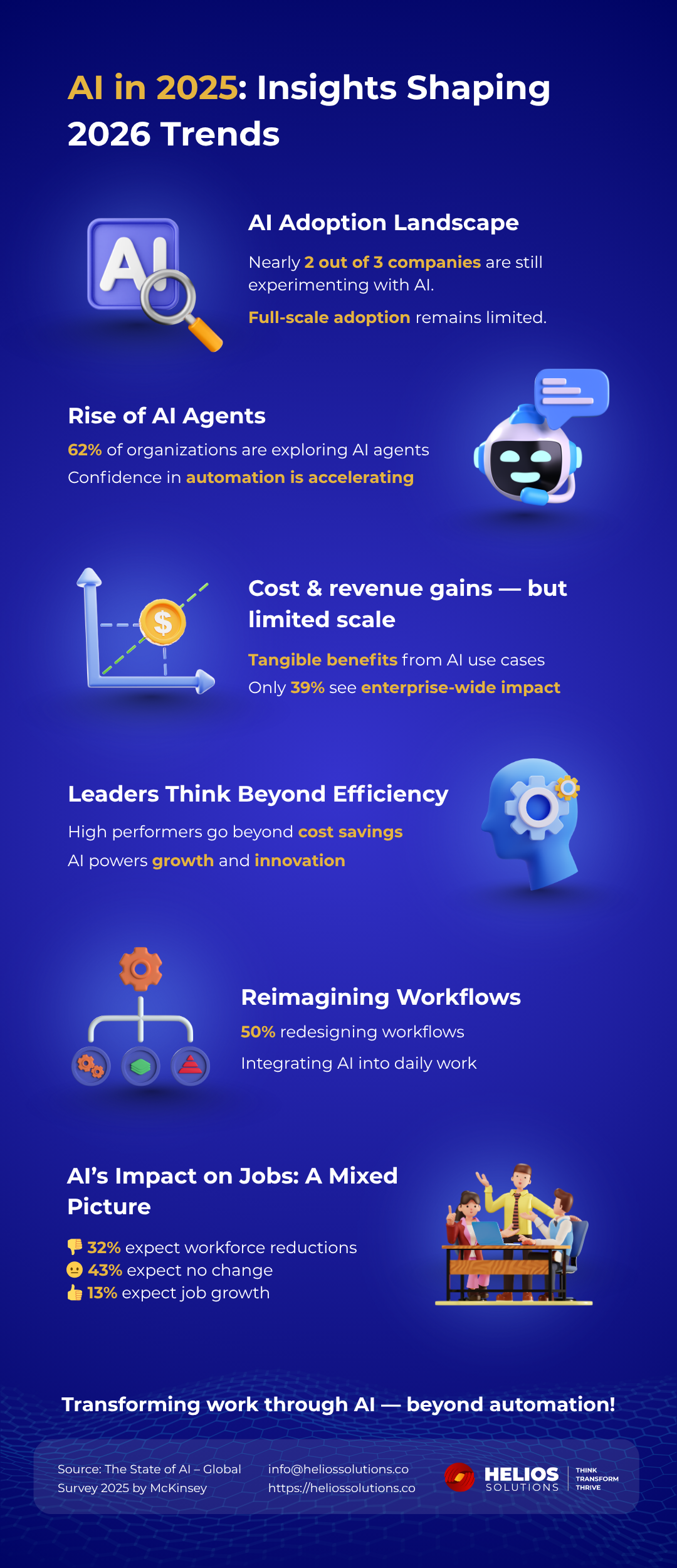
Expert insights into the most significant artificial intelligence trends expected to shape 2026, including breakthroughs in generative AI, ethical frameworks, and industry-specific applications.
#Infobox
#Overview
Artificial intelligence (AI) continues to evolve at an unprecedented pace, with 2026 poised to be a pivotal year for technological, ethical, and industrial transformation. Expert forecasts suggest that AI will transition from experimental applications to core infrastructure across sectors, driven by advancements in generative AI, multimodal systems, and AI governance. The integration of AI into daily operations—from personalized healthcare diagnostics to autonomous supply chain management—reflects a broader shift toward intelligent automation and decision-making.
Key drivers for 2026 include the maturation of large language models (LLMs), the rise of edge AI for real-time processing, and the establishment of global regulatory frameworks to address ethical concerns. Organizations are increasingly prioritizing AI alignment and explainable AI (XAI) to ensure transparency and trust in automated systems. Meanwhile, open-source initiatives are democratizing access to cutting-edge AI tools, fostering innovation in niche applications such as agricultural robotics and climate modeling.
#History / Background
The foundations of AI trends in 2026 trace back to decades of research in machine learning, neural networks, and symbolic AI. The 1950s marked the birth of AI as a formal discipline, with early breakthroughs like the Turing test and the Perceptron. However, progress stagnated during the "AI winter" of the 1970s and 1980s due to limited computational power and data availability.
The resurgence of AI in the 2010s was catalyzed by three key developments: the availability of big data, advancements in GPU technology, and the introduction of deep learning architectures such as convolutional neural networks (CNNs) and recurrent neural networks (RNNs). The 2016 victory of AlphaGo over a human champion in the game of Go demonstrated the potential of AI to surpass human expertise in complex tasks, sparking global investment and public interest.
By 2020, generative AI models like GPT-3 and DALL-E began generating human-like text and images, respectively, heralding a new era of creative and functional AI applications. The COVID-19 pandemic further accelerated AI adoption, particularly in healthcare for drug discovery and remote diagnostics. As of 2025, AI systems are increasingly embedded in critical infrastructure, raising both opportunities and challenges for society.
#How It Works
AI trends in 2026 are underpinned by several core technologies and methodologies that enable machines to perform tasks traditionally requiring human intelligence. At the heart of these systems are machine learning (ML) algorithms, which improve their performance through exposure to data. Supervised learning, unsupervised learning, and reinforcement learning are the primary paradigms, each suited to different types of problems.
Generative AI, a cornerstone of 2026 trends, relies on transformer models—a type of neural network architecture introduced in 2017—that excel at processing sequential data. These models, trained on vast datasets, can generate coherent text, images, and even audio by predicting the next most likely element in a sequence. Multimodal AI systems integrate multiple data types (e.g., text, images, audio) to perform tasks like visual question answering or autonomous navigation.
Edge AI represents another critical advancement, enabling AI models to run on local devices (e.g., smartphones, IoT sensors) rather than relying on cloud servers. This reduces latency and enhances privacy, making it ideal for applications like real-time medical monitoring or industrial predictive maintenance. Meanwhile, federated learning allows models to be trained across decentralized devices without sharing raw data, addressing privacy concerns in sectors like finance and healthcare.
To ensure reliability, AI systems in 2026 incorporate robust alignment techniques to align model outputs with human values and goals. Techniques such as reinforcement learning from human feedback (RLHF) and Constitutional AI are employed to mitigate risks like hallucinations or unintended biases. Additionally, explainability methods like SHAP (SHapley Additive exPlanations) and LIME (Local Interpretable Model-agnostic Explanations) provide insights into model decisions, fostering trust among users and regulators.
#Important Facts
- Market Growth: The global AI market is projected to grow from $136.6 billion in 2022 to $1.8 trillion by 2030, with a compound annual growth rate (CAGR) of 37.3%. (IDC, 2025)
- Generative AI Adoption: Over 60% of enterprises are expected to integrate generative AI tools into their workflows by 2026, up from 5% in 2023. (Gartner)
- Ethical AI Regulations: The European Union's Artificial Intelligence Act (AI Act), set to fully implement by 2026, will classify AI systems into risk tiers and impose strict compliance requirements.
- Energy Consumption: Training a single large AI model can emit as much carbon as five cars over their lifetimes, prompting a focus on Green AI and energy-efficient training methods.
- AI in Healthcare: By 2026, AI-driven diagnostics are projected to reduce diagnostic errors by 30% in radiology and pathology, improving patient outcomes. (McKinsey)
- Open-Source Dominance: Open-source AI models now account for 70% of all AI research publications, with frameworks like Hugging Face Transformers and PyTorch leading adoption.
- AI in Education: Personalized learning platforms powered by AI are expected to reach 40% of K-12 students globally by 2026, enhancing engagement and outcomes. (UNESCO)
- Cybersecurity Threats: AI-powered cyberattacks are anticipated to increase by 200% by 2026, with adversarial machine learning becoming a major concern for governments and enterprises.
#Timeline
- AlexNet wins ImageNet competit
AlexNet wins ImageNet competition, sparking deep learning revolution.
- AlphaGo defeats Lee Sedol
AlphaGo defeats Lee Sedol in Go, demonstrating AI's strategic prowess.
- GPT-2 released by OpenAI
GPT-2 released by OpenAI, showcasing advanced text generation capabilities.
- DALL-E and GPT-3 launch
DALL-E and GPT-3 launch, enabling high-quality image and text generation.
- Stable Diffusion and MidJourne
Stable Diffusion and MidJourney gain popularity for AI-generated art.
- EU proposes the AI
EU proposes the AI Act; major tech firms release safety guidelines for AI development.
- Multimodal models like Google'
Multimodal models like Google's [Gemini](# 'Gemini (AI model)') emerge, integrating text, image, and audio processing.
- First global AI safety
First global AI safety summit held; edge AI devices become mainstream in consumer electronics.
- Full implementation of the
Full implementation of the EU AI Act; generative AI integrates into 60% of enterprise workflows.
#Related Terms
#FAQ
What does AI Trends: Expert Insights For 2026 cover?
Reviews AI trends: expert insights for 2026, focusing on emerging developments, expert viewpoints, practical opportunities, and risks to watch.
Why is AI Trends: Expert Insights For 2026 important?
It helps readers understand key concepts, compare practical use cases, and evaluate how Artificial Intelligence decisions affect outcomes, risks, and implementation choices.
What should readers verify before applying this topic?
Readers should compare the benefits, limitations, data requirements, and related themes such as 2026 Trends, Trend, Insight before using the ideas in real projects.
#References
- AI Trends: Expert Insights For 2026 terminology and background research
- AI Trends: Expert Insights For 2026 use cases, implementation examples, and limitations
- Artificial Intelligence best practices, standards, and risk guidance
- 2026 Trends case studies, benchmarks, and current industry analysis


Comments
No comments yet. Start the discussion with a useful note.