

#Short Answer
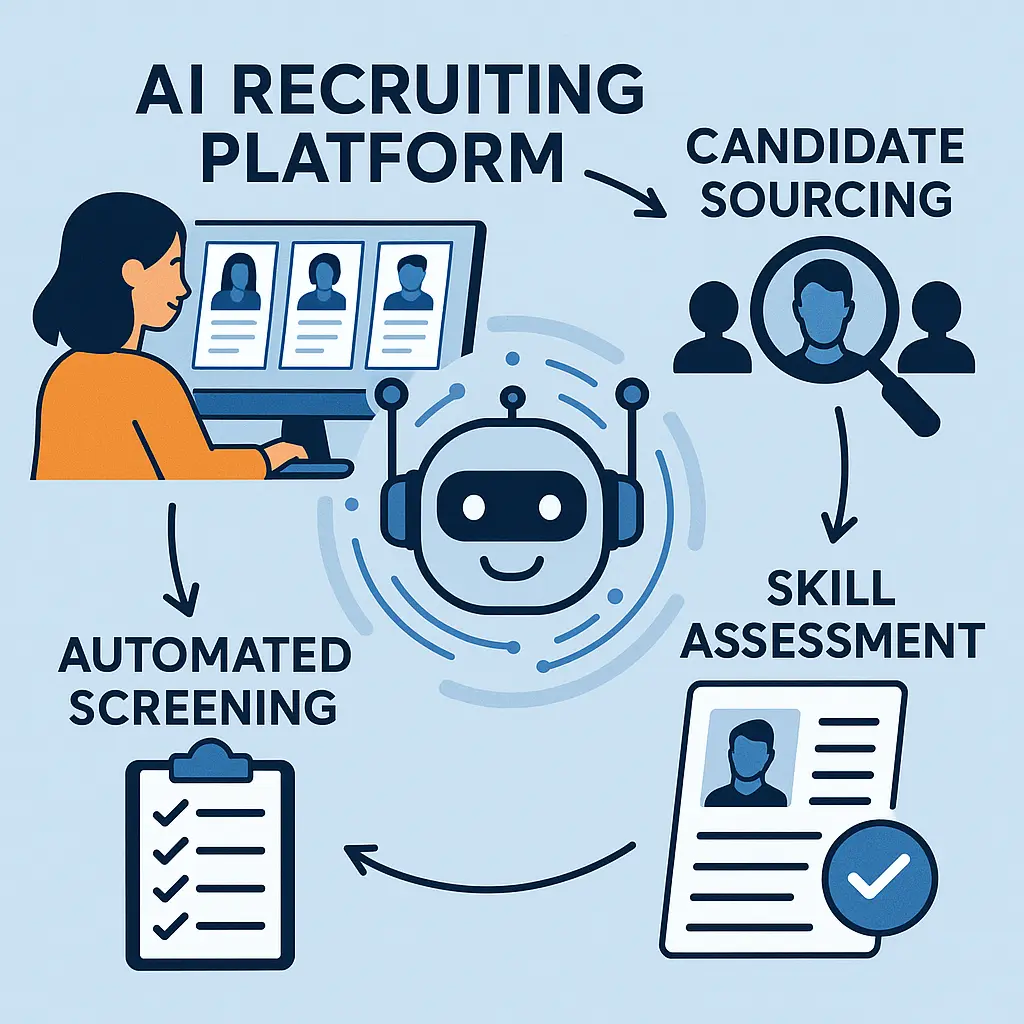
AI recruiters are automated systems that streamline hiring processes by analyzing resumes, conducting video interviews, and matching candidates with job roles.
#Infobox
#Overview
An AI recruiter is an automated system designed to enhance the efficiency and accuracy of the hiring process. These tools leverage artificial intelligence, machine learning, and natural language processing to analyze resumes, conduct preliminary interviews, and identify the best candidates for job openings. By automating repetitive tasks such as resume screening and interview scheduling, AI recruiters allow human recruiters to focus on more strategic aspects of talent acquisition, such as candidate engagement and cultural fit assessment.
AI recruiters are particularly beneficial in industries with high-volume hiring needs, such as retail, healthcare, and technology. They help organizations reduce time-to-hire, minimize human bias, and improve the overall quality of hires. Additionally, these systems can operate 24/7, providing consistent and scalable recruitment solutions.
#History / Background
The concept of AI in recruitment emerged in the early 2010s as advancements in machine learning and natural language processing made it feasible to automate complex tasks. Early adopters included large corporations and staffing agencies looking to optimize their hiring processes. The first AI-powered recruitment tools primarily focused on resume parsing and keyword matching, but as technology evolved, these systems began incorporating more sophisticated features such as video interview analysis and sentiment detection.
By the mid-2010s, AI recruiters started gaining mainstream attention, with companies like IBM, Oracle, and Workday integrating AI-driven features into their HR software. The rise of cloud computing and big data further accelerated the adoption of AI in recruitment, enabling real-time data processing and predictive analytics. Today, AI recruiters are a standard component of modern talent acquisition strategies, with continuous advancements in AI and machine learning driving further innovation.
#How It Works
#Resume Parsing and Screening
AI recruiters begin by parsing resumes and extracting relevant information such as skills, experience, and education. This process involves natural language processing (NLP) to understand the context of the text and identify key qualifications. The system then compares the extracted data against job requirements to shortlist candidates who best match the criteria.
#Video Interview Analysis
Some advanced AI recruiters can conduct and analyze video interviews. During a video interview, the AI evaluates candidates based on verbal and non-verbal cues, such as tone of voice, facial expressions, and body language. This analysis helps assess a candidate's communication skills, confidence, and cultural fit. The AI can also generate transcripts and summaries of the interviews for further review by human recruiters.
#Chatbot Assistance
AI recruiters often include chatbot functionality to interact with candidates in real-time. These chatbots can answer questions about job openings, provide application status updates, and schedule interviews. They enhance the candidate experience by offering immediate responses and reducing the time spent on administrative tasks.
#Predictive Analytics
AI recruiters use predictive analytics to forecast hiring outcomes based on historical data. This includes predicting candidate success in a role, identifying potential turnover risks, and optimizing recruitment strategies. By analyzing patterns in past hiring data, the AI can recommend adjustments to improve future hiring decisions.
#Important Facts
- Efficiency: AI recruiters can screen hundreds of resumes in minutes, significantly reducing the time-to-hire.
- Bias Reduction: By relying on data-driven algorithms, AI recruiters can minimize unconscious bias in the hiring process.
- Scalability: These systems can handle large volumes of applications, making them ideal for industries with high hiring demands.
- 24/7 Availability: AI recruiters operate around the clock, providing consistent support regardless of time zones or business hours.
- Cost Savings: Automating repetitive tasks reduces the need for additional staff, lowering operational costs.
- Candidate Experience: AI-driven chatbots and personalized interactions enhance the overall candidate experience.
#Timeline
- First AI-powered resume parsin
First AI-powered resume parsing tools introduced.
- IBM Watson begins integrating
IBM Watson begins integrating AI into HR solutions.
- Video interview analysis tools
Video interview analysis tools gain popularity.
- Predictive analytics becomes a
Predictive analytics becomes a standard feature in AI recruiters.
- AI recruiters become widely
AI recruiters become widely adopted in mid-sized and large enterprises.
- AI-driven chatbots and virtual
AI-driven chatbots and virtual assistants enhance candidate engagement.
- AI recruiters begin incorporat
AI recruiters begin incorporating generative AI for more personalized interactions.
#Related Terms
#FAQ
What does AI Recruiters: How To Work With Them cover?
AI recruiters: how to work with them covers practical examples, benefits, limitations, and important considerations for readers.
Why is AI Recruiters: How To Work With Them important?
It helps readers understand key concepts, compare practical use cases, and evaluate how Business & Marketing decisions affect outcomes, risks, and implementation choices.
What should readers verify before applying this topic?
Readers should compare the benefits, limitations, data requirements, and related themes such as Tutorial, Recruiter, Work before using the ideas in real projects.
#References
- AI Recruiters: How To Work With Them terminology and background research
- AI Recruiters: How To Work With Them use cases, implementation examples, and limitations
- Business & Marketing best practices, standards, and risk guidance
- Tutorial case studies, benchmarks, and current industry analysis
Comments
No comments yet. Start the discussion with a useful note.