

#Short Answer
Explores how artificial intelligence shapes smart homes and automating life, covering practical use cases, benefits, limitations, and risks.
#Infobox
Exploration of artificial intelligence integration in smart home ecosystems, enhancing automation, security, and energy efficiency through advanced algorithms and IoT devices.
Smart Home Automation with AI Field Artificial intelligence, Home automation Key Technologies Machine learning, IoT, voice assistants, computer vision Primary Applications Lighting, security, climate control, entertainment, energy management Major Developers Amazon, Google, Apple, Samsung, Bosch, Nest First Introduced Early 2000s (commercialization) Current Market Size (2025) Approx. $150 billion (global smart home market)
#Overview
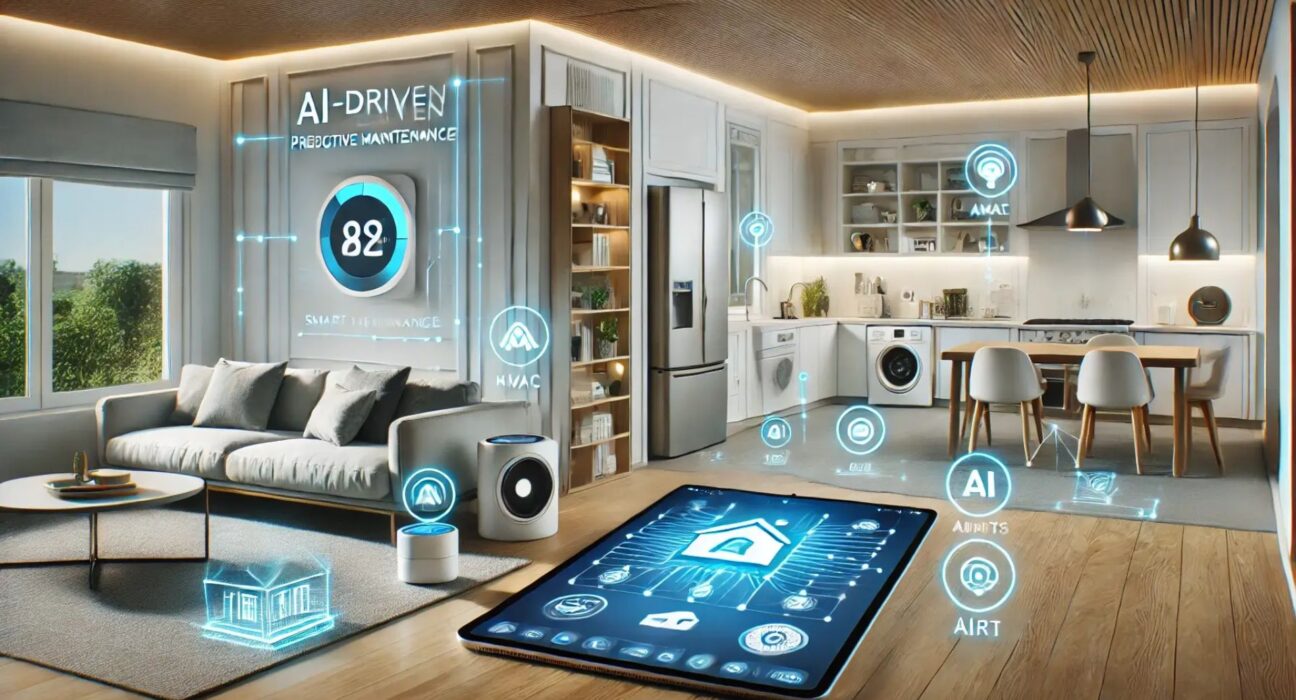
Smart home automation powered by artificial intelligence (AI) represents a transformative shift in residential living, merging digital intelligence with physical environments. AI-driven smart homes utilize interconnected devices, sensors, and advanced algorithms to anticipate user needs, optimize resource consumption, and enhance security without requiring manual intervention. These systems learn from behavioral patterns, adapt to preferences, and respond dynamically to environmental changes, creating an ecosystem that operates with unprecedented efficiency and personalization.
The integration of AI into smart homes extends beyond mere convenience, addressing critical challenges such as energy conservation, accessibility for individuals with disabilities, and real-time threat detection. By leveraging predictive analytics and real-time data processing, AI-enabled smart homes can reduce utility costs by up to 30%, improve indoor air quality, and provide proactive maintenance alerts, thereby extending the lifespan of household appliances. The market for AI-powered smart home solutions has expanded rapidly, with forecasts indicating a compound annual growth rate (CAGR) of 25% through 2030, driven by advancements in edge computing, 5G connectivity, and low-power AI chips.
#History / Background
The concept of smart homes dates back to the 1970s with the advent of X10, a communication protocol enabling remote control of electrical devices. However, the integration of AI into home automation began in earnest during the late 1990s and early 2000s, coinciding with the proliferation of the internet and mobile computing. Early systems, such as the Smart Home Project at the University of Colorado in 1998, focused on centralized control via desktop computers and infrared remotes.
The launch of Amazon Echo in 2014, featuring the voice assistant Alexa, marked a turning point by democratizing AI-driven home automation. This was followed by Google Home (2016) and Apple HomeKit (2017), which introduced natural language processing and contextual understanding. The introduction of IoT standards like Matter in 2022 further standardized device interoperability, enabling seamless integration across brands.
Historically, smart home adoption was limited by high costs, fragmented ecosystems, and concerns over data privacy. However, the advent of open-source platforms such as Home Assistant and the decline in hardware prices have accelerated adoption, particularly in urban areas where energy efficiency and remote monitoring are prioritized.
#How It Works
#Core Components
AI-powered smart home systems rely on several interconnected components working in tandem:
- Sensors: Motion detectors, temperature and humidity sensors, air quality monitors, and occupancy sensors collect real-time environmental data.
- Actuators: Smart plugs, motorized blinds, robotic vacuums, and thermostats execute commands based on AI decisions.
- Edge Devices: Local hubs like Raspberry Pi or NVIDIA Jetson boards process data on-device to reduce latency and enhance privacy.
- Cloud Services: Platforms such as AWS IoT or Google Cloud IoT provide scalable storage, machine learning inference, and remote access.
- User Interfaces: Voice assistants (e.g., Alexa, Google Assistant), mobile apps, and touch panels enable intuitive control and configuration.
#AI Algorithms
Several AI techniques underpin smart home automation:
- Supervised Learning: Used to classify user behaviors (e.g., identifying when a user typically arrives home) based on labeled datasets.
- Reinforcement Learning: Enables systems to optimize energy use by rewarding actions that reduce consumption without sacrificing comfort.
- Computer Vision: Facial recognition for personalized greetings, gesture control for hands-free operation, and anomaly detection in security footage.
- Natural Language Processing (NLP): Powers voice assistants to interpret commands like “Set the thermostat to 72°F” with high accuracy.
- Predictive Analytics: Forecasts appliance failures by analyzing usage patterns and sensor anomalies.
#Network Architecture
Modern smart homes operate on hybrid architectures combining local and cloud processing:
- Local (Edge) Processing: Devices like smart thermostats (e.g., Nest Learning Thermostat) learn user habits offline and adapt without internet dependency.
- Cloud-Based AI: Services such as Google Nest Aware use cloud servers to analyze long-term behavioral trends and provide personalized recommendations.
- Mesh Networking: Protocols like Zigbee and Z-Wave enable low-power, scalable communication between devices, even in large homes.
#Important Facts
- AI-driven smart thermostats can save homeowners an average of $131–$145 per year on heating and cooling bills.
- Over 60% of smart home users report improved sleep quality due to AI-optimized lighting and temperature settings.
- The global smart home market reached $110 billion in 2023 and is projected to exceed $300 billion by 2030.
- AI-powered security systems reduce false alarms by up to 90% through advanced motion detection and facial recognition.
- More than 40% of smart home devices are now compatible with voice assistants, with Alexa supporting over 140,000 skills.
- Energy-efficient smart homes can reduce carbon emissions by up to 20% compared to traditional residences.
- Privacy concerns remain a top barrier, with 68% of consumers hesitant to adopt AI systems due to data collection practices.
#Timeline
Year Event 1975 X10 protocol introduced, enabling basic remote control of home devices. 1998 Smart Home Project at University of Colorado demonstrates centralized automation. 2007 First generation of smart thermostats (e.g., Ecobee) launched. 2011 Nest Learning Thermostat debuts, using AI to learn user preferences. 2014 Amazon Echo with Alexa revolutionizes voice-controlled smart homes. 2016 Google Home launches, integrating AI with Google Assistant. 2017 Apple HomeKit introduces Siri integration for smart home control. 2020 AI-powered robotic vacuums (e.g., Roborock S7) achieve 99% room coverage accuracy. 2022 Matter standard released, unifying smart home device compatibility. 2023 AI-driven predictive maintenance systems for appliances enter mainstream. 2024 On-device AI models (e.g., Apple’s Private Cloud Compute) enhance privacy. 2025 Over 50% of new homes in developed markets include AI-enabled automation systems.
#Related Terms
#FAQ
What does AI And Smart Homes: Automating Life cover?
Explores how artificial intelligence shapes smart homes and automating life, covering practical use cases, benefits, limitations, and risks.
Why is AI And Smart Homes: Automating Life important?
It helps readers understand key concepts, compare practical use cases, and evaluate how Creative AI decisions affect outcomes, risks, and implementation choices.
What should readers verify before applying this topic?
Readers should compare the benefits, limitations, data requirements, and related themes such as Smart, Home, Automating before using the ideas in real projects.
#References
- AI And Smart Homes: Automating Life terminology and background research
- AI And Smart Homes: Automating Life use cases, implementation examples, and limitations
- Creative AI best practices, standards, and risk guidance
- Smart case studies, benchmarks, and current industry analysis


Comments
No comments yet. Start the discussion with a useful note.