


#Short Answer
Explores how artificial intelligence shapes recovery and disaster preparedness, covering practical use cases, benefits, limitations, and risks.
#Infobox
Artificial Intelligence in Disaster Response Field Artificial intelligence Focus Disaster preparedness, response, and recovery Key Applications Early warning systems, damage assessment, resource allocation, predictive modeling Notable Technologies Machine learning, computer vision, natural language processing, robotics First Use Mid-20th century (emerging in modern applications post-2010) Major Organizations UN OCHA, FEMA, Red Cross, IBM, Google DeepMind
#Overview
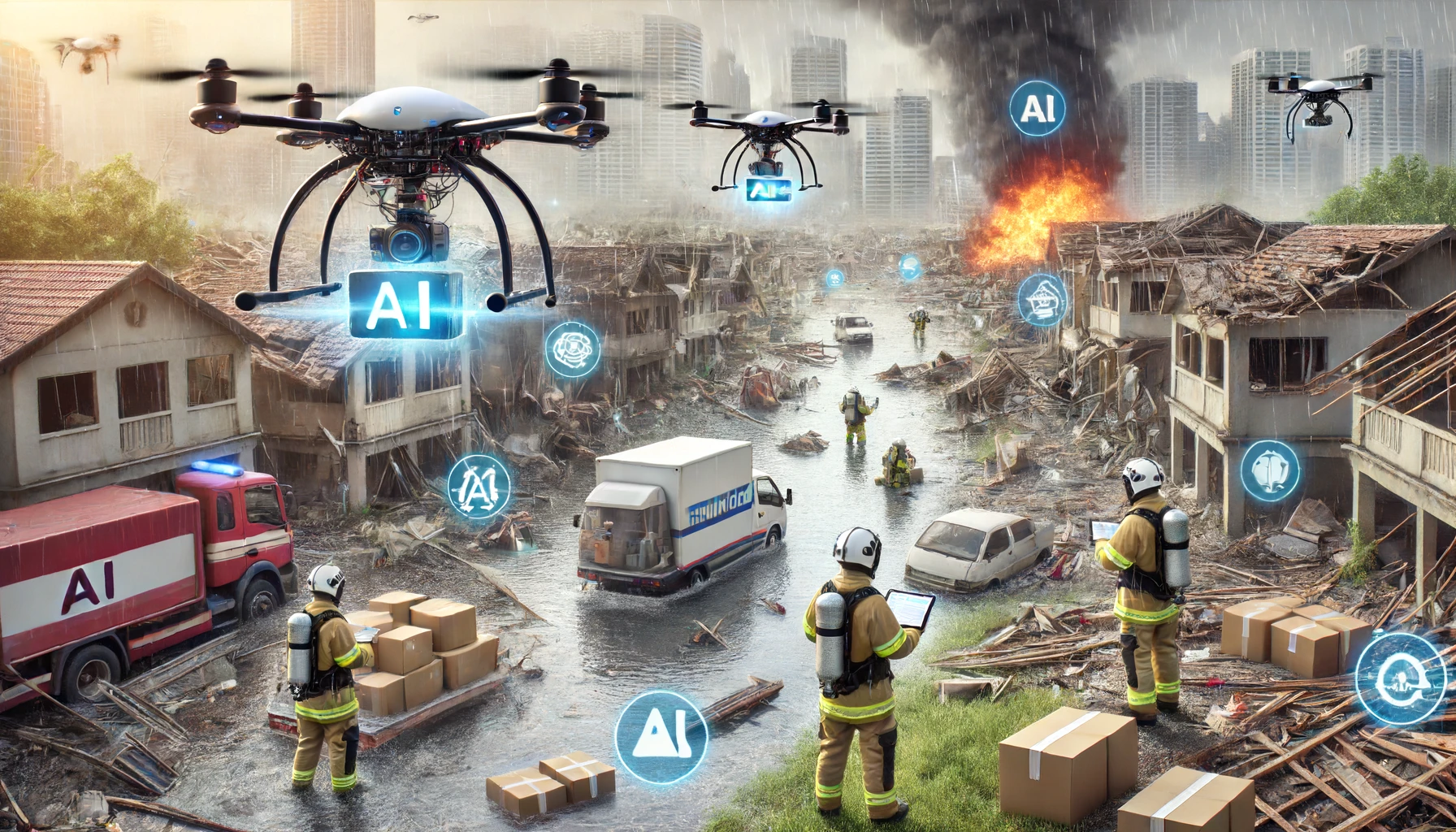
AI in disaster management refers to the application of machine learning, computer vision, natural language processing, and robotics to mitigate the impact of natural and human-made disasters. These technologies improve early warning systems, streamline emergency response, and support long-term recovery efforts by analyzing vast datasets more efficiently than traditional methods. AI-driven tools are increasingly integrated into government and humanitarian organizations' strategies to enhance resilience and reduce disaster risks.
#Key Areas of Application
- Early Warning Systems: AI analyzes seismic, meteorological, and oceanographic data to predict earthquakes, hurricanes, and tsunamis with greater accuracy.
- Damage Assessment: Computer vision processes satellite and drone imagery to identify affected areas and infrastructure damage in real time.
- Resource Allocation: Machine learning optimizes the distribution of medical supplies, food, and personnel during crises.
- Predictive Modeling: AI simulates disaster scenarios to inform urban planning and infrastructure design.
- Communication and Coordination: Natural language processing tools analyze social media and emergency calls to prioritize response efforts.
#History / Background
The integration of AI into disaster management began in the late 20th century, with early applications focusing on weather forecasting and seismic activity prediction. The 2004 Indian Ocean tsunami and Hurricane Katrina (2005) highlighted the need for advanced technological solutions to improve response times and resource allocation. By the 2010s, advancements in big data analytics and machine learning enabled more sophisticated AI tools, such as IBM's Watson and Google's DeepMind, to assist in disaster prediction and recovery.
In 2017, the AI for Social Good initiative by the United Nations emphasized AI's role in addressing global challenges, including disaster resilience. The COVID-19 pandemic (2020–2022) further accelerated AI adoption, with tools like contact-tracing apps and predictive models aiding public health responses. Today, AI is a critical component of disaster management frameworks worldwide, supported by collaborations between tech companies, governments, and humanitarian organizations.
#How It Works
#Data Collection and Processing
AI systems rely on diverse data sources to function effectively:
- Remote Sensing: Satellites and drones capture high-resolution images of disaster zones, which AI analyzes to detect structural damage, flooding, or wildfires.
- IoT Sensors: Deployed in high-risk areas, these sensors monitor environmental conditions (e.g., temperature, humidity, seismic activity) and transmit data to AI models.
- Social Media and News Feeds: Natural language processing (NLP) tools scan platforms like Twitter and Facebook for real-time reports of disasters, enabling rapid response.
- Historical Data: Machine learning algorithms train on past disaster events to identify patterns and improve predictive accuracy.
#Predictive Modeling and Early Warning
AI-driven predictive models use historical and real-time data to forecast disasters before they occur. For example:
- Earthquake Prediction: AI analyzes seismic patterns and fault line movements to estimate the likelihood and timing of earthquakes.
- Flood Forecasting: Machine learning models integrate rainfall data, river levels, and topography to predict flooding in specific regions.
- Wildfire Detection: Computer vision systems on satellites and drones identify smoke or heat signatures, triggering alerts to authorities.
#Damage Assessment and Response Optimization
Post-disaster, AI accelerates damage assessment and resource allocation:
- Image Recognition: AI processes drone footage to classify damage levels (e.g., collapsed buildings, blocked roads) and prioritize rescue efforts.
- Supply Chain Optimization: Machine learning algorithms determine the most efficient routes for delivering aid based on road conditions and demand.
- Chatbots and Virtual Assistants: AI-powered tools provide real-time information to affected populations, reducing the burden on emergency hotlines.
#Important Facts
- Speed: AI can analyze large datasets in minutes, whereas manual analysis may take days or weeks.
- Accuracy: Machine learning models improve over time, reducing false positives in disaster predictions.
- Cost-Effectiveness: Automating repetitive tasks (e.g., data entry, damage assessment) lowers operational costs for governments and NGOs.
- Global Reach: AI tools are deployed worldwide, from flood-prone Bangladesh to wildfire-stricken California.
- Ethical Considerations: Bias in training data and privacy concerns (e.g., surveillance during crises) are ongoing challenges.
- Integration with Robotics: Drones and robots equipped with AI assist in search-and-rescue missions in hazardous environments.
#Timeline
Year Event 1980s Early use of statistical models for weather forecasting. 2004 Indian Ocean tsunami sparks interest in AI for disaster prediction. 2005 Hurricane Katrina highlights gaps in disaster response, prompting technological advancements. 2010 AI tools begin integrating into emergency management systems (e.g., FEMA's use of data analytics). 2016 IBM's Watson assists in disaster recovery planning. 2017 UN launches AI for Social Good initiative, focusing on disaster resilience. 2020 COVID-19 pandemic accelerates AI adoption in public health and crisis management. 2023 AI-powered drones and robots deployed in Turkey-Syria earthquake response.
#Related Terms
#FAQ
What does AI And Recovery: Disaster Preparedness cover?
Explores how artificial intelligence shapes recovery and disaster preparedness, covering practical use cases, benefits, limitations, and risks.
Why is AI And Recovery: Disaster Preparedness important?
It helps readers understand key concepts, compare practical use cases, and evaluate how Climate & Society decisions affect outcomes, risks, and implementation choices.
What should readers verify before applying this topic?
Readers should compare the benefits, limitations, data requirements, and related themes such as Recovery, Disaster, Preparednes before using the ideas in real projects.
#References
- AI And Recovery: Disaster Preparedness terminology and background research
- AI And Recovery: Disaster Preparedness use cases, implementation examples, and limitations
- Climate & Society best practices, standards, and risk guidance
- Recovery case studies, benchmarks, and current industry analysis


Comments
No comments yet. Start the discussion with a useful note.