

#Short Answer
Explores how artificial intelligence shapes neuroscience and mapping the brain, covering practical use cases, benefits, limitations, and risks.
#Infobox
Artificial Intelligence in Neuroscience Field Neuroscience, Artificial Intelligence Focus Brain mapping, neural networks, cognitive modeling Key Techniques Machine learning, deep learning, neuroimaging Applications Disease diagnosis, brain-computer interfaces, neuroprosthetics Notable Researchers Terry Sejnowski, Demis Hassabis, Karl Deisseroth
#Overview
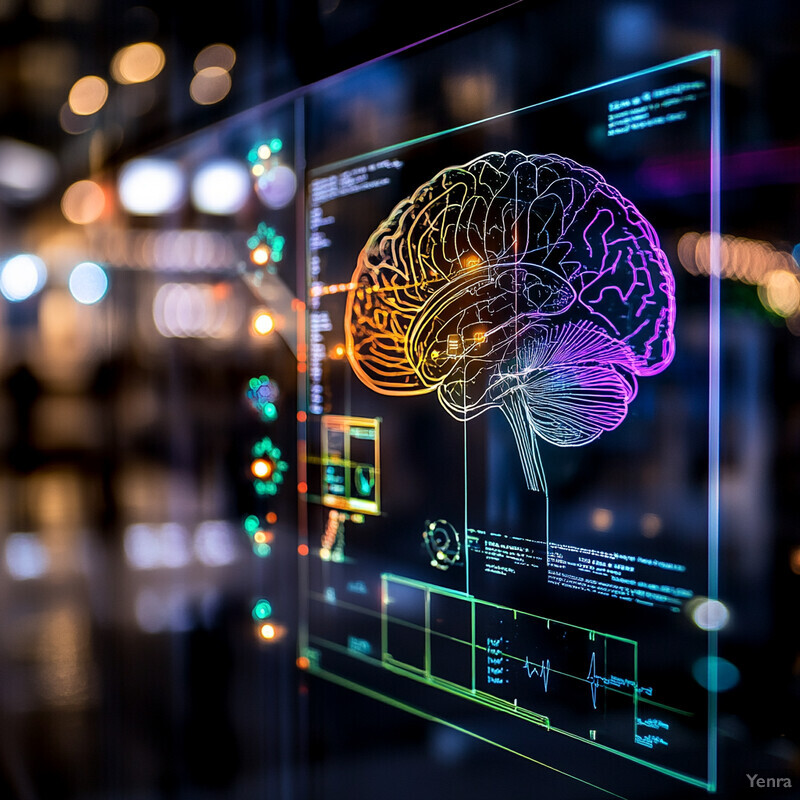
AI in neuroscience refers to the application of machine learning, deep learning, and computational models to study the structure and function of the brain. By leveraging large-scale neuroimaging data—such as MRI, fMRI, and CT scans—AI algorithms can identify patterns, segment brain regions, and predict neural activity with unprecedented accuracy. This synergy between AI and neuroscience has led to breakthroughs in understanding neurological disorders, enhancing cognitive functions, and developing therapeutic interventions.
The integration of AI into neuroscience has also paved the way for brain-computer interfaces (BCIs), which allow direct communication between the brain and external devices. These interfaces hold potential for restoring motor functions in paralysis patients, treating epilepsy, and even augmenting human cognition. Additionally, AI-driven brain mapping supports personalized medicine by tailoring treatments based on individual neural activity patterns.
#History / Background
#Early Developments
The roots of AI in neuroscience trace back to the mid-20th century, when early computational models of neural networks were proposed. In 1943, Warren McCulloch and Walter Pitts introduced the concept of artificial neurons, laying the foundation for neural network theory. By the 1980s, advancements in computing power enabled researchers to simulate neural circuits, though these models were limited in complexity.
Neuroimaging techniques such as MRI and PET scans emerged in the 1970s and 1980s, providing non-invasive ways to observe brain activity. However, manual analysis of these images was time-consuming and prone to human error. The need for automation led to the adoption of AI techniques, particularly machine learning, to process and interpret neuroimaging data more efficiently.
#Modern Advancements
The 21st century has witnessed a surge in AI applications within neuroscience, driven by breakthroughs in deep learning and big data analytics. The Human Brain Project (launched in 2013) and the BRAIN Initiative (2013) in the U.S. have accelerated research by funding large-scale brain mapping projects. These initiatives rely heavily on AI to process vast datasets, simulate neural networks, and generate predictive models of brain function.
Key milestones include the development of convolutional neural networks (CNNs) for image segmentation, which have improved the accuracy of brain tumor detection and structural mapping. AI-powered tools like DeepMind’s AlphaFold have also contributed to neuroscience by predicting protein structures critical for understanding neurodegenerative diseases.
#How It Works
#Neuroimaging and AI
AI enhances neuroimaging through automated segmentation, where algorithms identify and delineate brain structures from MRI or CT scans. Traditional methods relied on manual tracing by experts, which was labor-intensive and inconsistent. AI models, particularly CNNs, now perform this task with high precision, reducing processing time from hours to minutes.
For functional imaging (e.g., fMRI), AI algorithms analyze patterns of brain activity to detect abnormalities or predict cognitive states. Machine learning models can classify mental disorders such as schizophrenia or Alzheimer’s by identifying subtle differences in neural connectivity. Reinforcement learning is also used to optimize brain-computer interfaces, enabling real-time adjustments based on user feedback.
#Neural Network Modeling
AI simulates biological neural networks to study brain function and dysfunction. Spiking neural networks (SNNs), which mimic the brain’s electrical signaling, are used to model synaptic plasticity and learning. These models help researchers understand how neural circuits process information and how disruptions lead to neurological disorders.
Generative adversarial networks (GANs) are employed to create synthetic brain images for training AI models when real data is scarce. This approach improves the robustness of diagnostic tools by exposing them to diverse scenarios.
#Brain-Computer Interfaces
BCIs translate neural signals into commands for external devices, such as prosthetic limbs or computer cursors. AI plays a crucial role in decoding these signals by filtering noise, identifying relevant patterns, and translating them into actionable outputs. For example, AI-driven BCIs can restore communication for patients with locked-in syndrome by converting neural activity into text or speech.
#Important Facts
- Accuracy: AI-powered brain segmentation achieves over 90% accuracy in identifying tumor boundaries, compared to 70-80% with manual methods.
- Speed: Automated neuroimaging analysis reduces processing time from days to minutes, enabling faster diagnosis and treatment planning.
- Applications: AI is used in detecting Alzheimer’s disease up to 6 years before clinical symptoms appear by analyzing hippocampal atrophy patterns.
- Ethical Considerations: The use of AI in neuroscience raises concerns about data privacy, algorithmic bias, and the potential for misuse in cognitive enhancement.
- Future Potential: Emerging AI techniques, such as transformers and neuromorphic computing, promise to further enhance brain mapping by enabling real-time, large-scale neural simulations.
#Timeline
Year Event 1943 McCulloch-Pitts neuron model introduced, laying the foundation for artificial neural networks. 1958 Frank Rosenblatt develops the Perceptron, an early neural network model. 1977 First MRI scans of the human brain are produced, enabling non-invasive neuroimaging. 1986 Backpropagation algorithm popularized, allowing neural networks to learn from data. 1990 Neural networks begin to be applied to medical image analysis, including brain scans. 2013 Human Brain Project and BRAIN Initiative launched, accelerating AI-driven neuroscience research. 2016 DeepMind’s AlphaGo defeats a human Go champion, demonstrating the power of deep learning in complex decision-making. 2020 AI models achieve human-level performance in brain tumor segmentation from MRI scans. 2023 Neuromorphic chips, designed to mimic the brain’s architecture, are tested for real-time neural signal processing.
#Related Terms
#FAQ
What does AI And Neuroscience: Mapping The Brain cover?
Explores how artificial intelligence shapes neuroscience and mapping the brain, covering practical use cases, benefits, limitations, and risks.
Why is AI And Neuroscience: Mapping The Brain important?
It helps readers understand key concepts, compare practical use cases, and evaluate how Artificial Intelligence decisions affect outcomes, risks, and implementation choices.
What should readers verify before applying this topic?
Readers should compare the benefits, limitations, data requirements, and related themes such as Neuroscience, Mapping, Brain before using the ideas in real projects.
#References
- AI And Neuroscience: Mapping The Brain terminology and background research
- AI And Neuroscience: Mapping The Brain use cases, implementation examples, and limitations
- Artificial Intelligence best practices, standards, and risk guidance
- Neuroscience case studies, benchmarks, and current industry analysis



Comments
No comments yet. Start the discussion with a useful note.