

#Short Answer
Explores how artificial intelligence shapes literacy and improving reading skills, covering practical use cases, benefits, limitations, and risks.
#Infobox
Artificial Intelligence and Literacy: Improving Reading Skills is an interdisciplinary field that explores how AI technologies can enhance reading comprehension, literacy development, and language acquisition. This approach integrates machine learning, natural language processing (NLP), and educational psychology to create adaptive learning systems that personalize instruction for readers of all ages and proficiency levels. The integration of AI in literacy education aims to address challenges such as reading difficulties, language barriers, and the need for individualized learning pathways.
AI-driven tools and frameworks enhance reading skills through adaptive learning, natural language processing, and personalized instruction.AI and Literacy: Improving Reading SkillsFieldEducational Technology, Artificial Intelligence, Literacy StudiesKey TechnologiesNatural Language Processing (NLP), Machine Learning, Adaptive Learning SystemsApplicationsReading Comprehension, Language Acquisition, Literacy Development, Special EducationBenefitsPersonalized Learning, Real-Time Feedback, Accessibility, ScalabilityChallengesData Privacy, Bias in AI Models, Implementation Costs, Teacher TrainingNotable FrameworksAI Literacy Framework, Adaptive Reading Platforms, Intelligent Tutoring Systems
#Overview
AI and literacy initiatives leverage artificial intelligence to transform traditional reading instruction by providing adaptive, data-driven learning experiences. These systems analyze a reader's performance in real time, identifying strengths and weaknesses to tailor content, pacing, and difficulty levels accordingly. Unlike conventional methods, AI-powered literacy tools can accommodate diverse learning styles, support multilingual learners, and offer immediate feedback, which is critical for sustained engagement and improvement.
One of the most significant advantages of AI in literacy is its ability to democratize access to high-quality education. For instance, AI-driven platforms can assist non-native speakers in mastering vocabulary and grammar, while also helping struggling readers through targeted interventions. Additionally, these tools can track progress over time, enabling educators to make informed decisions about instructional strategies and resource allocation.
The concept of AI literacy extends beyond using AI as a tool; it also involves teaching individuals to understand, evaluate, and interact with AI systems responsibly. This dual focus—on using AI to improve literacy and on fostering AI literacy itself—creates a symbiotic relationship that enhances both technological and linguistic competencies.
#History / Background
The intersection of AI and literacy began to take shape in the late 20th century, as advancements in computational linguistics and machine learning laid the groundwork for intelligent educational systems. Early efforts focused on developing computer-assisted instruction (CAI) programs, which used simple algorithms to deliver basic reading exercises. However, these systems lacked the sophistication to adapt dynamically to individual learners.
By the 1990s, the rise of the internet and more powerful computing capabilities enabled the creation of intelligent tutoring systems (ITS), which combined AI with educational psychology to provide personalized feedback. Projects like Project LISTEN, developed at Carnegie Mellon University, demonstrated how AI could read aloud to students and respond to their reading errors in real time. These early systems proved that AI could play a meaningful role in literacy instruction, though they were often limited by the technology of the time.
The 2010s marked a turning point with the advent of deep learning and natural language processing (NLP) breakthroughs. Tools like IBM Watson and Google's BERT began to demonstrate human-like language understanding, enabling AI systems to analyze complex texts, generate explanations, and even assess writing quality. This period also saw the proliferation of adaptive learning platforms, such as Lexia Core5 and DreamBox, which used AI to customize reading instruction based on student performance data.
In recent years, the focus has expanded to include AI literacy frameworks, which aim to educate users about the ethical, social, and technical aspects of AI. These frameworks emphasize critical thinking, problem-solving, and the ability to interact with AI systems responsibly—skills that are increasingly vital in an AI-driven world.
#How It Works
#Natural Language Processing
At the core of AI-driven literacy tools is natural language processing (NLP), a branch of AI that enables computers to understand, interpret, and generate human language. NLP algorithms analyze text by breaking it down into components such as syntax, semantics, and pragmatics. For example, when a student reads a passage, an NLP system can identify unfamiliar words, assess comprehension through question-answering, and provide definitions or synonyms in real time.
Advanced NLP models, such as transformers (e.g., BERT, RoBERTa), use deep learning to capture contextual relationships between words. This allows AI systems to not only recognize individual words but also understand their meaning within a sentence or paragraph. For instance, an AI tutor can distinguish between the homonyms "read" (past tense) and "read" (present tense) based on the surrounding context.
#Adaptive Learning Systems
Adaptive learning platforms use AI to adjust the difficulty and type of reading material based on a learner's performance. These systems employ machine learning algorithms to track metrics such as reading speed, accuracy, and comprehension scores. If a student struggles with a particular concept, the system may provide additional practice exercises or simplify the text. Conversely, if a student excels, the system can introduce more challenging material to maintain engagement.
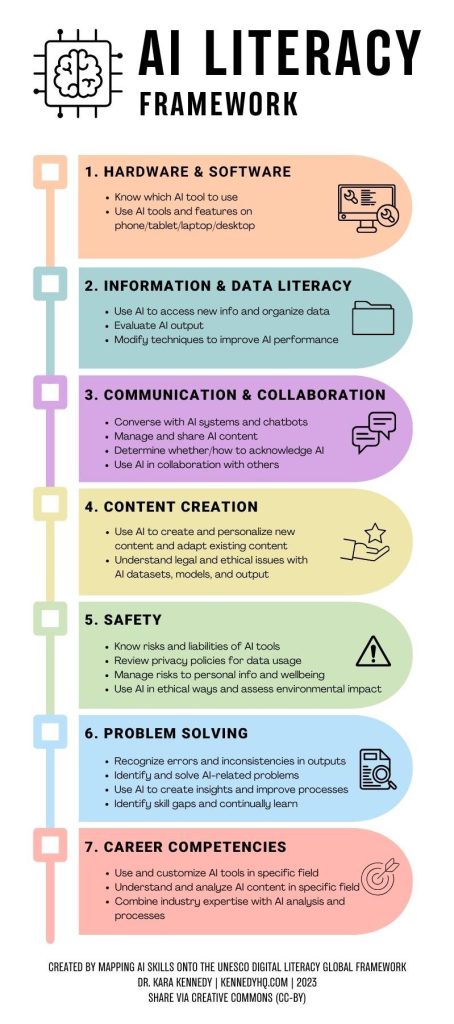
For example, the AI Literacy Framework developed by educational institutions and tech companies outlines how adaptive systems can scaffold learning. The framework categorizes literacy skills into levels (e.g., foundational, intermediate, advanced) and uses AI to recommend resources tailored to each level. This ensures that learners receive instruction that is neither too easy nor too difficult, optimizing their progress.
#Intelligent Tutoring Systems
Intelligent tutoring systems (ITS) are AI-powered platforms that simulate one-on-one tutoring by providing personalized feedback and guidance. These systems use a combination of NLP, machine learning, and educational data mining to diagnose learning gaps and offer targeted interventions. For instance, an ITS might highlight a student's mispronunciation of a word, suggest pronunciation exercises, or provide a summary of a complex text to improve understanding.
One notable example is ScootPad, which uses AI to adapt reading lessons based on student performance. The system tracks progress across multiple skills, such as phonics, fluency, and vocabulary, and adjusts the curriculum dynamically. ITS can also incorporate gamification elements, such as rewards and badges, to motivate learners and enhance engagement.
#Speech Recognition and Analysis
AI tools equipped with speech recognition technology can assess a student's reading aloud by analyzing pronunciation, fluency, and intonation. Systems like Fluency Tutor and ReadWorks use AI to provide real-time feedback on a reader's performance, identifying areas for improvement such as mispronunciations or unnatural pauses. This technology is particularly beneficial for English language learners (ELLs) and students with speech or language disorders.
Speech analysis also enables AI to detect emotional and cognitive states, such as frustration or confusion, by analyzing vocal patterns. This allows tutoring systems to adjust their responses or offer encouragement when a student is struggling, creating a more empathetic and supportive learning environment.
#Important Facts
- Personalization: AI-driven literacy tools can adapt to individual learning styles, pacing, and proficiency levels, making instruction more effective than one-size-fits-all approaches.
- Real-Time Feedback: Unlike traditional methods, AI systems provide immediate corrections and explanations, helping learners address mistakes promptly and reinforce correct understanding.
- Accessibility: AI tools can support diverse learners, including those with dyslexia, visual impairments, or limited proficiency in the language of instruction, through features like text-to-speech and adjustable fonts.
- Data-Driven Insights: Educators can use AI-generated analytics to identify trends, track progress, and tailor instruction to meet the needs of specific student groups or individuals.
- Ethical Considerations: The use of AI in literacy raises concerns about data privacy, algorithmic bias, and the potential for over-reliance on technology. Addressing these issues is critical to ensuring equitable and responsible implementation.
- Global Reach: AI literacy tools can bridge language gaps by offering multilingual support, making high-quality education accessible to non-native speakers worldwide.
- Teacher Augmentation: Rather than replacing educators, AI systems serve as tools that augment teaching by automating administrative tasks, providing supplementary resources, and enabling teachers to focus on mentorship and complex instruction.
#Timeline
YearEvent1960sEarly computer-assisted instruction (CAI) programs emerge, using simple algorithms for basic reading drills.1980sIntelligent tutoring systems (ITS) begin to incorporate AI for personalized feedback in literacy education.1990sProjects like Project LISTEN demonstrate AI's potential for real-time reading assessment and intervention.2000sAdaptive learning platforms, such as Lexia Core5, gain traction by using AI to customize reading instruction.2010sBreakthroughs in deep learning and NLP enable AI systems to understand and generate human-like language, enhancing literacy tools.2018Google's BERT model revolutionizes NLP, improving AI's ability to comprehend and generate text, which benefits literacy applications.2020AI literacy frameworks are developed to educate users about the ethical and technical aspects of AI, emphasizing critical thinking and responsible interaction.2023The AI Literacy Framework is introduced, providing a structured approach to integrating AI in literacy education and fostering AI literacy among learners.
#Related Terms
#FAQ
What does AI And Literacy: Improving Reading Skills cover?
Explores how artificial intelligence shapes literacy and improving reading skills, covering practical use cases, benefits, limitations, and risks.
Why is AI And Literacy: Improving Reading Skills important?
It helps readers understand key concepts, compare practical use cases, and evaluate how Education & Careers decisions affect outcomes, risks, and implementation choices.
What should readers verify before applying this topic?
Readers should compare the benefits, limitations, data requirements, and related themes such as Literacy, Improving, Reading before using the ideas in real projects.
#References
- AI And Literacy: Improving Reading Skills terminology and background research
- AI And Literacy: Improving Reading Skills use cases, implementation examples, and limitations
- Education & Careers best practices, standards, and risk guidance
- Literacy case studies, benchmarks, and current industry analysis




Comments
No comments yet. Start the discussion with a useful note.