

#Short Answer
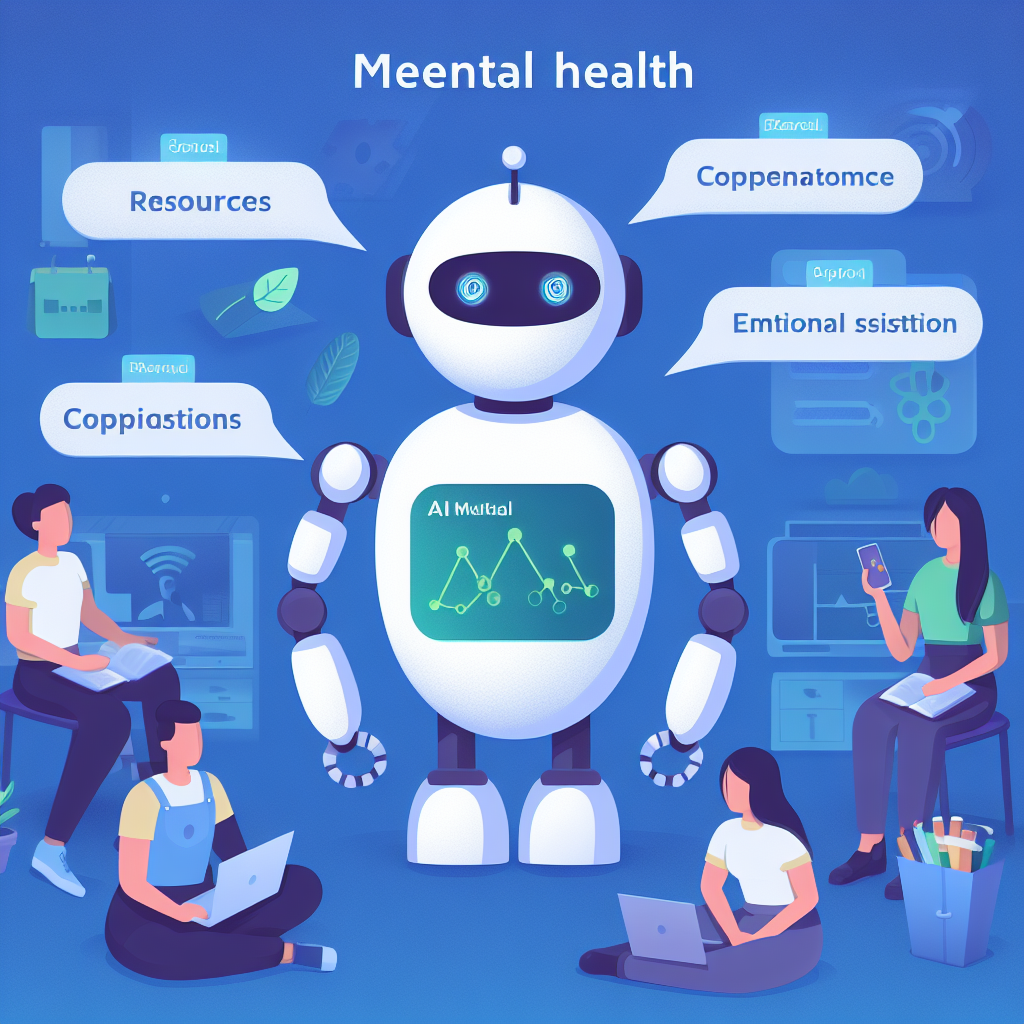
Explores how artificial intelligence shapes happiness and improving well-being, covering practical use cases, benefits, limitations, and risks.
#Infobox
Artificial Intelligence and Happiness Field Artificial intelligence, Positive psychology, Happiness Key People Martin Seligman, Andrew Ng, Fei-Fei Li Notable Institutions Stanford University, MIT Media Lab, University of Oxford Applications Mental health coaching, emotional well-being tracking, personalized recommendations, stress reduction Impact Improved mental health outcomes, enhanced emotional regulation, scalable well-being interventions
#Overview
Artificial intelligence (AI) is increasingly being integrated into mental health and well-being practices to foster happiness through personalized interventions. By analyzing vast amounts of data—such as mood patterns, sleep quality, and social interactions—AI systems can identify trends, predict emotional fluctuations, and suggest tailored strategies for stress reduction, emotional regulation, and positive habit formation. These advancements are part of a broader movement in positive psychology and behavioral science, where technology bridges the gap between scientific research and practical, everyday well-being solutions.
The intersection of AI and happiness represents a paradigm shift in how individuals, organizations, and even governments approach mental health. Unlike traditional one-size-fits-all approaches, AI-driven systems offer personalization at scale, enabling interventions that are both evidence-based and adaptable to unique circumstances. This has significant implications for reducing the global burden of mental health disorders, which the World Health Organization estimates affects over 280 million people worldwide.
#History / Background
#Early Developments
The conceptual foundation for AI in happiness can be traced back to the mid-20th century, with the emergence of cognitive psychology and the study of human emotions. Researchers like Martin Seligman, often regarded as the father of positive psychology, laid the groundwork for understanding happiness as a measurable and improvable state. His work in the 1990s emphasized the importance of subjective well-being and the factors that contribute to it, such as gratitude, resilience, and social connections.
In parallel, advancements in computing and data analysis in the 1980s and 1990s enabled the first attempts to model human emotions computationally. Early AI systems focused on rule-based approaches to simulate emotional responses, though these were limited by the technology of the time. The rise of machine learning in the 2000s, particularly with the advent of deep learning, revolutionized the field by allowing systems to learn from data without explicit programming.
#Modern Era
The 2010s marked a turning point with the proliferation of smartphones and wearable devices, which provided real-time access to behavioral and physiological data. Companies like Apple, Fitbit, and Garmin introduced tools that tracked sleep, activity, and heart rate, creating a foundation for AI-driven well-being applications. Meanwhile, research in affective computing—a field pioneered by Rosalind Picard—focused on enabling machines to recognize, interpret, and respond to human emotions.
By the late 2010s, AI-powered mental health platforms began gaining traction. Apps like Woebot and Replika used natural language processing (NLP) to engage users in therapeutic conversations, while platforms like Headspace and Calm incorporated AI to personalize meditation and mindfulness exercises. The COVID-19 pandemic further accelerated adoption, as remote work and social isolation increased demand for digital well-being solutions.
#How It Works
#Data Collection
AI systems designed to enhance happiness rely on multiple data sources to build a comprehensive understanding of an individual's well-being. These sources include:
- Behavioral Data: Tracking user interactions with apps, such as journaling entries, mood logs, and activity levels.
- Physiological Data: Information from wearables (e.g., heart rate variability, sleep patterns) and biometric sensors.
- Contextual Data: Environmental factors like location, time of day, and social interactions (e.g., via calendar apps or social media).
- Explicit Feedback: User-reported data through surveys, quizzes, or voice inputs.
#Processing and Analysis
Once collected, data is processed using advanced algorithms to extract meaningful insights. Key techniques include:
- Natural Language Processing (NLP): Analyzes text or speech to detect emotional tone, sentiment, and cognitive patterns. For example, an AI might identify signs of anxiety in a user's journal entries.
- Computer Vision: Evaluates facial expressions or body language (via camera inputs) to assess emotional states.
- Predictive Modeling: Uses historical data to forecast mood fluctuations or identify risk factors for mental health decline.
- Reinforcement Learning: Continuously improves recommendations by learning from user feedback and outcomes.
#Personalized Interventions
Based on the analysis, AI systems deliver tailored interventions to improve happiness. These may include:
- Cognitive Behavioral Therapy (CBT) Techniques: AI-driven chatbots or apps guide users through exercises to reframe negative thoughts.
- Mindfulness and Meditation: Personalized audio or video sessions adapted to the user's stress levels or schedule.
- Gamification: Engaging activities (e.g., gratitude journaling, social challenges) that encourage positive habits.
- Social Support: Connecting users with communities or peer groups based on shared interests or emotional needs.
- Environmental Adjustments: Suggesting changes to daily routines, such as taking breaks or reducing screen time.
#Important Facts
- Scalability: AI can provide mental health support to millions simultaneously, addressing the global shortage of therapists.
- Accessibility: Digital tools reduce barriers to care, particularly for underserved populations in remote or low-resource areas.
- Ethical Considerations: Issues like data privacy, algorithmic bias, and the potential for over-reliance on AI remain critical challenges.
- Effectiveness: Studies show that AI-driven well-being apps can reduce symptoms of depression and anxiety by up to 30% in some cases.
- Integration with Healthcare: AI is increasingly being adopted in clinical settings, such as for early detection of mental health disorders or post-treatment monitoring.
#Timeline
Year Event 1998 Martin Seligman launches the field of positive psychology, emphasizing happiness as a measurable construct. 2003 Rosalind Picard publishes Emotion and Computing, laying the groundwork for affective computing. 2011 MIT Media Lab develops Affective Computing research, enabling machines to recognize emotions. 2016 Woebot, an AI-powered mental health chatbot, is launched, using CBT techniques. 2018 Apple introduces the Screen Time feature, integrating AI to track and analyze digital well-being. 2020 COVID-19 pandemic accelerates adoption of AI well-being tools, with a 40% increase in app downloads. 2022 Google Health launches Mood Tracking in Fitbit, using AI to predict emotional trends. 2023 Meta introduces AI-driven mental health resources in its social media platforms.
#Related Terms
#FAQ
What does AI And Happiness: Improving Well-Being cover?
Explores how artificial intelligence shapes happiness and improving well-being, covering practical use cases, benefits, limitations, and risks.
Why is AI And Happiness: Improving Well-Being important?
It helps readers understand key concepts, compare practical use cases, and evaluate how Artificial Intelligence decisions affect outcomes, risks, and implementation choices.
What should readers verify before applying this topic?
Readers should compare the benefits, limitations, data requirements, and related themes such as Happines, Improving, Wellbeing before using the ideas in real projects.
#References
- AI And Happiness: Improving Well-Being terminology and background research
- AI And Happiness: Improving Well-Being use cases, implementation examples, and limitations
- Artificial Intelligence best practices, standards, and risk guidance
- Happines case studies, benchmarks, and current industry analysis



Comments
No comments yet. Start the discussion with a useful note.