

#Short Answer
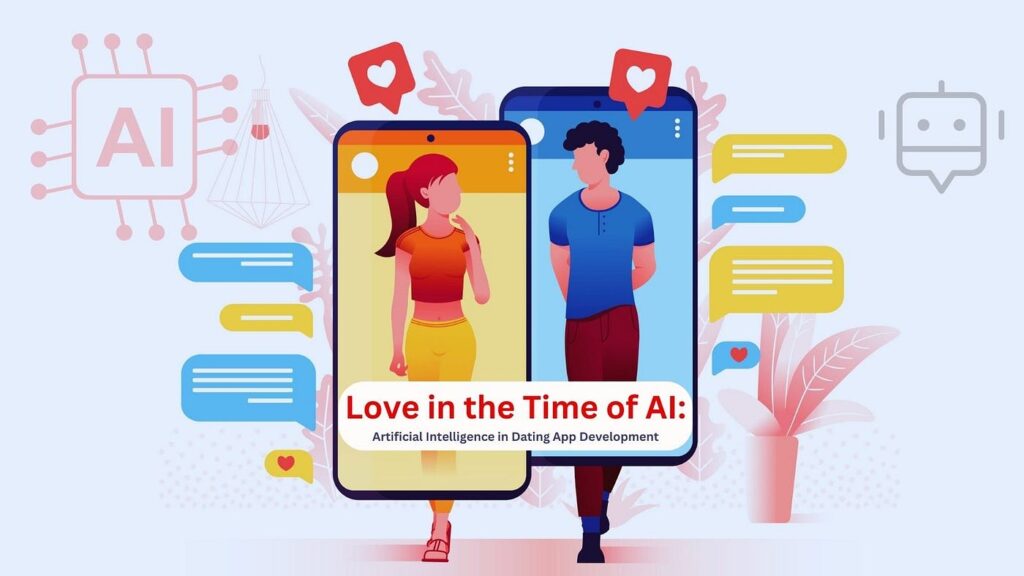
Artificial intelligence (AI) has revolutionized the online dating industry by transforming how people meet and connect. Dating apps leverage AI-pow...
#Infobox
AI in dating apps refers to the integration of artificial intelligence technologies to enhance matchmaking, user experience, and safety in digital dating platforms. These systems analyze user behavior, preferences, and interactions to suggest compatible partners, optimize profiles, and even detect fraudulent activity.
#Overview
Artificial intelligence (AI) has revolutionized the online dating industry by transforming how people meet and connect. Dating apps leverage AI-powered algorithms to analyze vast amounts of user data, including preferences, behavior patterns, and social interactions, to deliver highly personalized match suggestions. Beyond matchmaking, AI enhances user experience through features like automated profile creation, real-time chat moderation, and even AI-generated conversation starters. These advancements have not only increased user retention and satisfaction but also introduced new challenges related to privacy, bias, and ethical considerations in algorithmic decision-making.
The integration of AI in dating platforms has become a cornerstone of modern digital romance, enabling platforms to adapt to individual user needs dynamically. From filtering potential matches based on compatibility scores to detecting fake profiles and scams, AI systems operate in the background to create safer and more efficient dating environments. As AI technologies continue to evolve, their role in dating apps is expected to expand, incorporating more sophisticated predictive analytics and emotional intelligence tools to further refine the matchmaking process.
#History / Background
#Early Beginnings (1960s–1990s)
The concept of using technology to facilitate romantic connections predates the internet. One of the earliest examples is the 1965 "Operation Match", developed by Harvard students, which used a punch-card system to match students based on questionnaires. This manual approach laid the groundwork for algorithmic matchmaking, though it lacked the computational power of modern AI.
In the 1980s and 1990s, early computer dating services emerged, such as Match.com (founded in 1995), which used basic digital forms to pair users. These platforms relied on static surveys and manual filtering, with no real-time data analysis or adaptive learning.
#Rise of Online Dating (2000s)
The early 2000s saw the proliferation of dating websites like eHarmony (2000) and OkCupid (2004), which introduced more sophisticated matching algorithms. eHarmony, for instance, used a compatibility matching system based on psychological research, while OkCupid employed a collaborative filtering approach to suggest matches. However, these systems were still limited by the lack of real-time user behavior data and advanced machine learning techniques.
#AI Integration (2010s–Present)
The 2010s marked a turning point with the rise of mobile dating apps and the integration of AI. Tinder (2012) popularized the swipe-based interface, which, while initially simple, later incorporated AI to refine match suggestions based on user swipes and interactions. By the mid-2010s, platforms like Bumble and Hinge began using AI to analyze user profiles, messages, and engagement patterns to improve match quality.
In 2017, Facebook entered the dating space with its "Facebook Dating" feature, leveraging its vast user data and AI capabilities to suggest matches. Around the same time, startups like Happn used geolocation data combined with AI to match users who had crossed paths in real life. The late 2010s also saw the emergence of AI-driven chatbots and virtual assistants, such as Replika, which blurred the lines between dating and AI companionship.
Today, AI in dating is a multi-billion-dollar industry, with companies investing heavily in deep learning, natural language processing (NLP), and computer vision to enhance user experiences. The COVID-19 pandemic further accelerated the adoption of AI in dating apps, as users sought more efficient and personalized ways to connect remotely.
#How It Works
#Data Collection and Preprocessing
AI-driven dating apps begin by collecting extensive user data, including:
- Demographic information (age, gender, location)
- Explicit preferences (e.g., desired age range, interests, relationship goals)
- Implicit behavior (swipes, message interactions, time spent on profiles)
- Biometric data (facial recognition for profile photos, voice analysis in chat)
- Social media activity (if linked to the app)
This data is preprocessed to remove noise, standardize formats, and handle missing values. For instance, images may be analyzed using computer vision to detect attributes like attractiveness, facial symmetry, or emotional expressions.
#Matchmaking Algorithms
AI matchmaking relies on several key algorithms:
- Collaborative Filtering: Recommends matches based on the preferences of similar users. For example, if User A and User B have both liked User C, the algorithm may suggest User C to User D, who shares interests with A and B.
- Content-Based Filtering: Matches users based on the attributes of their profiles. For instance, if a user frequently swipes right on profiles mentioning hiking, the algorithm will prioritize suggesting other hiking enthusiasts.
- Hybrid Models: Combine collaborative and content-based filtering to improve accuracy. Platforms like OkCupid use hybrid models to balance user preferences with broader compatibility metrics.
- Deep Learning: Neural networks analyze complex patterns in user behavior, such as linguistic cues in messages or subtle preferences inferred from swiping habits. For example, Tinder uses deep learning to predict which profiles a user is likely to swipe right on.
#Natural Language Processing (NLP)
NLP is used to analyze and generate text in dating apps. Key applications include:
- Profile Optimization: AI tools like Hinge’s "Most Compatible" feature analyze profile text to suggest improvements, such as rephrasing prompts or highlighting engaging details.
- Conversation Starters: AI generates personalized openers based on user profiles. For example, if a user mentions a love for travel, the AI might suggest, "Where’s the next place on your bucket list?"
- Message Moderation: NLP detects inappropriate or harmful language in chats, flagging messages for review or blocking users who violate community guidelines.
- Sentiment Analysis: Analyzes the emotional tone of messages to gauge compatibility or detect red flags, such as overly aggressive or passive-aggressive communication.
#Computer Vision
Computer vision enhances profile analysis by:
- Facial Recognition: Evaluates attractiveness, age, and emotional expressions in profile photos to suggest improvements or filter out misleading images.
- Image Tagging: Automatically tags photos with attributes like "beach," "dog," or "outdoors" to help users discover shared interests.
- Deepfake Detection: Identifies manipulated or AI-generated profile pictures to combat fraud.
#Real-Time Adaptation
AI systems continuously learn from user interactions. For example:
- If a user frequently swipes right on profiles with a certain hairstyle, the algorithm will prioritize similar styles in future suggestions.
- If a user’s messages receive low response rates, the AI may suggest profile adjustments or conversation topics.
- If a user’s activity declines, the app might send personalized notifications or incentives to re-engage.
#Important Facts
- Accuracy of AI Matchmaking: Studies suggest that AI-driven dating apps can improve match accuracy by up to 30% compared to traditional methods, though results vary by platform.
- Bias in Algorithms: AI systems can perpetuate biases present in training data, such as favoring certain ethnicities, body types, or socioeconomic backgrounds. For example, some apps have been criticized for prioritizing profiles of users with higher education levels or specific income brackets.
- Fraud Detection: AI detects up to 90% of fake profiles and scams on major dating platforms, using techniques like image recognition and behavioral analysis.
- User Engagement: Apps with AI-powered features report a 20–40% increase in daily active users, as personalized recommendations keep users engaged longer.
- Privacy Concerns: The collection and analysis of sensitive user data raise ethical questions about consent, data security, and the potential for misuse. For instance, some apps have faced lawsuits over unauthorized data sharing with third parties.
- Emotional Impact: While AI can enhance compatibility, over-reliance on algorithms may lead to unrealistic expectations or reduced human judgment in relationships.
- Cost of AI Integration: Developing and maintaining AI systems for dating apps can cost platforms millions annually, though the investment is often justified by increased user retention and revenue.
#Timeline
- A recommendation algorithm that suggests items based on the preferences of similar users.
- A recommendation system that suggests items based on the attributes of a user’s profile.
- A field of AI that focuses on the interaction between computers and human language.
- An AI technology that enables computers to interpret and analyze visual information from the world.
- A subset of machine learning that uses neural networks with many layers to model complex patterns.
- A combination of collaborative and content
based filtering to improve match accuracy.
- Systematic errors in AI systems that lead to unfair or discriminatory outcomes, often due to biased training data.
- AI systems that generate new content, such as text, images, or conversation starters, based on learned patterns.
- A dating app interface where users swipe left or right to indicate interest in potential matches.
- AI
powered features that facilitate remote interactions, such as video dates or AI-generated conversation topics.
#Related Terms
#FAQ
What does AI And Dating: Matchmaking Algorithms cover?
Explores how artificial intelligence shapes dating and matchmaking algorithms, covering practical use cases, benefits, limitations, and risks.
Why is AI And Dating: Matchmaking Algorithms important?
It helps readers understand key concepts, compare practical use cases, and evaluate how Artificial Intelligence decisions affect outcomes, risks, and implementation choices.
What should readers verify before applying this topic?
Readers should compare the benefits, limitations, data requirements, and related themes such as Dating, Matchmaking, Algorithm before using the ideas in real projects.
#References
- AI And Dating: Matchmaking Algorithms terminology and background research
- AI And Dating: Matchmaking Algorithms use cases, implementation examples, and limitations
- Artificial Intelligence best practices, standards, and risk guidance
- Dating case studies, benchmarks, and current industry analysis



Comments
No comments yet. Start the discussion with a useful note.