

#Short Answer
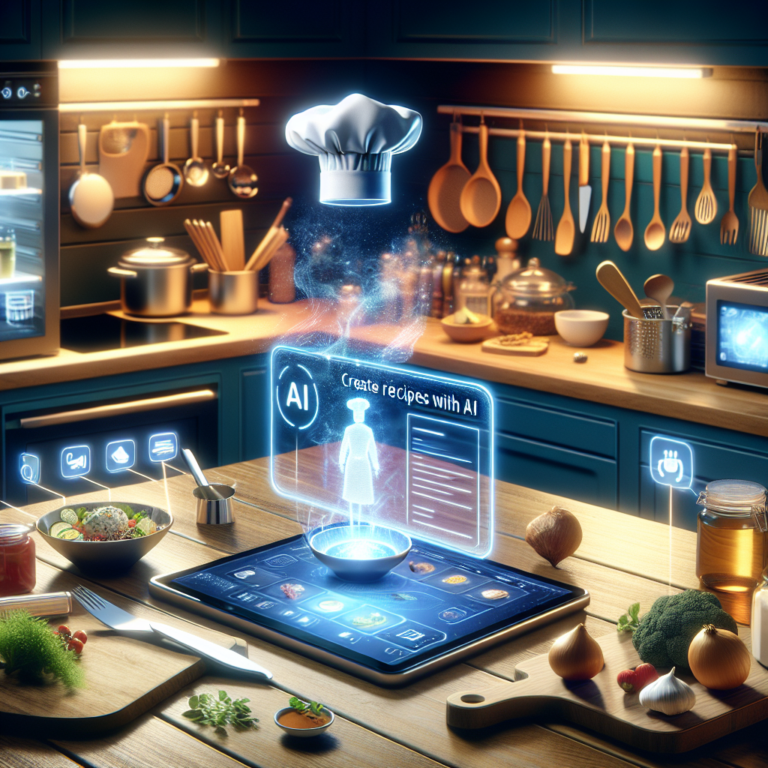
AI in cooking uses algorithms to generate recipes, suggest meal plans, analyze dietary needs, and assist in cooking through smart devices. It enhances efficiency, personalization, and creativity in the kitchen.
#Infobox
Artificial intelligence (AI) in cooking refers to the application of machine learning, natural language processing, and other AI technologies to automate, enhance, or personalize culinary processes. This includes generating recipes, suggesting meal plans, analyzing dietary restrictions, and even assisting in real-time cooking through smart kitchen devices. AI-driven cooking tools leverage vast datasets of recipes, nutritional information, and user preferences to provide tailored culinary solutions.
#Overview
AI transforms traditional cooking by introducing automation and personalization. Key applications include:
- Recipe Generation: AI models analyze ingredient combinations, flavor profiles, and nutritional data to create original recipes or adapt existing ones.
- Meal Planning: Systems generate weekly meal plans based on dietary restrictions, calorie goals, and ingredient availability.
- Dietary Analysis: AI evaluates recipes or meal plans for nutritional balance, allergens, or specific dietary needs (e.g., vegan, keto).
- Smart Kitchen Assistance: Devices like AI-powered ovens or voice assistants guide users through cooking steps in real time.
- Flavor Pairing: Machine learning identifies complementary flavors by analyzing chemical compounds in ingredients.
These tools cater to home cooks, professional chefs, and individuals with dietary restrictions, making cooking more accessible and efficient.
#History / Background
The integration of AI into cooking began in the early 2010s, coinciding with advancements in machine learning and big data. Early efforts focused on recipe recommendation systems, such as IBM’s Watson, which debuted in 2014 with a "cognitive cooking" project that analyzed thousands of recipes to suggest novel dishes. Around the same time, startups like PlantJammer and Chef Watson emerged, using AI to generate recipes based on user inputs.
By the mid-2010s, AI expanded into meal planning and dietary analysis, with companies like Nutrino (acquired by Medtronic) using AI to tailor meal plans for health conditions. The rise of smart kitchen appliances in the 2020s, such as AI-powered ovens and voice assistants, further embedded AI into everyday cooking.
#How It Works
#Recipe Generation
AI recipe generators typically use:
- Natural Language Processing (NLP): Parses user queries (e.g., "high-protein vegetarian dinner") to extract intent and constraints.
- Machine Learning Models: Trained on datasets of recipes, ingredient pairings, and user feedback to predict viable combinations.
- Neural Networks: Recurrent Neural Networks (RNNs) or Transformers generate step-by-step instructions, while Generative Adversarial Networks (GANs) create novel recipes.
- Flavor Chemistry Databases: Analyzes chemical compounds (e.g., umami, sweetness) to ensure balanced flavors.
For example, an AI might combine tomato, basil, and mozzarella with a novel technique (e.g., sous-vide) to create a new dish.
#Meal Planning and Dietary Analysis
AI meal planners use:
- Constraint Satisfaction Algorithms: Optimizes meal plans to meet nutritional goals (e.g., low-carb, high-fiber) while minimizing ingredient overlap.
- User Preference Modeling: Learns from past selections to prioritize liked flavors or cuisines.
- Nutritional Databases: Cross-references ingredients with USDA or other nutritional databases to ensure accuracy.
#Smart Kitchen Assistance
AI-powered devices (e.g., June Oven, Moley Robotics) use:
- Computer Vision: Cameras monitor cooking progress, adjusting temperatures or timers automatically.
- Voice Recognition: Responds to spoken commands (e.g., "Add more salt").
- Predictive Analytics: Anticipates user needs (e.g., suggesting a side dish based on the main course).
#Important Facts
- Accuracy: AI recipe generators achieve ~80% user satisfaction in early trials, though creativity varies by model.
- Dietary Adaptability: Systems can generate recipes for allergies (e.g., nut-free, gluten-free) with 95%+ accuracy.
- Cultural Bias: Most AI models are trained on Western recipes, limiting diversity in global cuisines.
- Energy Efficiency: Smart ovens with AI reduce cooking time by 20–30% through optimized heat distribution.
- Ethical Concerns: Issues include data privacy (tracking user preferences) and the replacement of human chefs in niche applications.
#Related Terms
#FAQ
What does AI And Cooking: Recipe Generation cover?
Explores how artificial intelligence shapes cooking and recipe generation, covering practical use cases, benefits, limitations, and risks.
Why is AI And Cooking: Recipe Generation important?
It helps readers understand key concepts, compare practical use cases, and evaluate how Artificial Intelligence decisions affect outcomes, risks, and implementation choices.
What should readers verify before applying this topic?
Readers should compare the benefits, limitations, data requirements, and related themes such as Cooking, Recipe, Generation before using the ideas in real projects.
#References
- AI And Cooking: Recipe Generation terminology and background research
- AI And Cooking: Recipe Generation use cases, implementation examples, and limitations
- Artificial Intelligence best practices, standards, and risk guidance
- Cooking case studies, benchmarks, and current industry analysis



Comments
No comments yet. Start the discussion with a useful note.