


#Short Answer
Artificial Intelligence (AI) has revolutionized the way humans communicate by introducing tools and systems that bridge linguistic, cultural, and t...
#Infobox
Artificial Intelligence (AI) enhances communication by automating translations, generating human-like text, and enabling real-time interactions across languages and platforms, thereby breaking down linguistic and cultural barriers.
#Overview
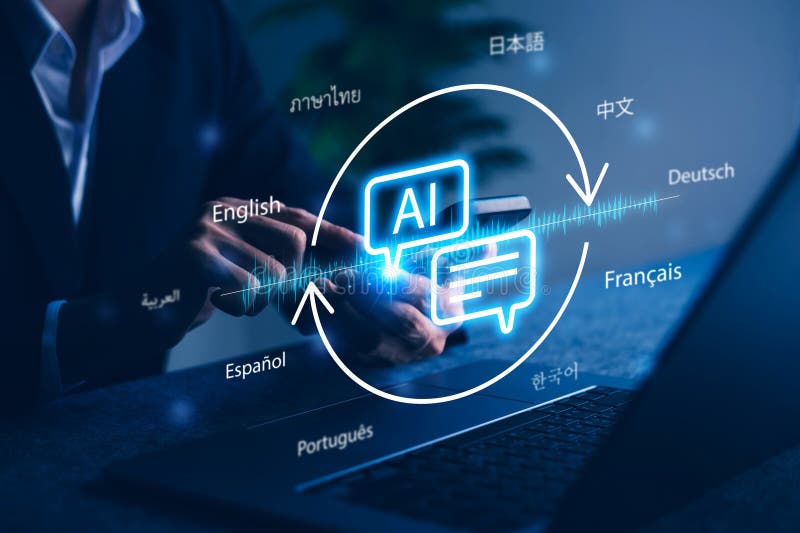
Artificial Intelligence (AI) has revolutionized the way humans communicate by introducing tools and systems that bridge linguistic, cultural, and technological gaps. Through advancements in Natural Language Processing (NLP), machine translation, and generative AI, AI enables seamless interactions across diverse languages and platforms. These technologies not only facilitate real-time communication but also automate repetitive tasks, such as translation and content generation, thereby enhancing productivity and accessibility.
AI-driven communication tools are now integral to global business operations, education, healthcare, and social interactions. They support multilingual customer support, instant translation of documents, and even real-time interpretation during international meetings. As AI continues to evolve, its role in communication is expected to expand, further reducing barriers and fostering inclusivity in an increasingly interconnected world.
#History and Background
#Early Developments
The foundations of AI in communication can be traced back to the mid-20th century, with early experiments in machine translation during the 1950s. The Georgetown-IBM experiment in 1954 demonstrated the potential of translating Russian sentences into English using a limited set of rules, marking a significant milestone in computational linguistics. However, these early systems were constrained by rigid algorithms and lacked the ability to handle the nuances of human language.
#Rise of Natural Language Processing
The 1980s and 1990s saw the emergence of statistical methods in NLP, which improved the accuracy of language processing tasks. Systems like IBM’s statistical machine translation (SMT) models leveraged large datasets to enhance translation quality. Concurrently, rule-based systems were gradually replaced by more flexible approaches, laying the groundwork for modern AI-driven communication tools.
#Breakthroughs in Machine Learning
The 2010s witnessed a paradigm shift with the advent of deep learning and neural networks. Models such as Transformer models (e.g., BERT, GPT) revolutionized NLP by enabling context-aware language understanding and generation. These advancements led to the development of highly accurate machine translation systems, such as Google Translate and DeepL, which could handle complex sentences and idiomatic expressions with greater precision.
#Generative AI and Real-Time Communication
In recent years, generative AI has further expanded the capabilities of AI in communication. Tools like AI-powered chatbots, virtual assistants, and real-time transcription services have become ubiquitous, enabling instantaneous interactions across languages and time zones. The integration of AI into communication platforms has also democratized access to multilingual tools, making them available to individuals and organizations worldwide.
#How AI Enhances Communication
#Natural Language Processing (NLP)
Natural Language Processing is a subfield of AI that focuses on the interaction between computers and human language. NLP enables machines to understand, interpret, and generate human language in a way that is both meaningful and contextually appropriate. Key techniques in NLP include:
- Tokenization: Breaking down text into individual words or phrases for analysis.
- Part-of-Speech Tagging: Identifying the grammatical structure of sentences.
- Named Entity Recognition (NER): Detecting and classifying named entities such as people, places, and organizations.
- Sentiment Analysis: Determining the emotional tone of a text.
#Machine Translation
Machine translation involves the automatic conversion of text or speech from one language to another. Modern machine translation systems, such as neural machine translation (NMT), use deep learning models to produce more accurate and natural-sounding translations. These systems analyze entire sentences rather than individual words, allowing them to capture context and idiomatic expressions. Popular examples include Google Translate, DeepL, and Microsoft Translator.
#Speech Recognition and Synthesis
AI-powered speech recognition systems convert spoken language into written text, enabling real-time transcription and voice commands. Conversely, speech synthesis (or text-to-speech) converts written text into spoken words, which is widely used in virtual assistants like Siri and Alexa. These technologies rely on deep learning models trained on vast datasets of spoken and written language to achieve high accuracy.
#Generative AI
Generative AI models, such as large language models (LLMs), can produce human-like text based on input prompts. These models are trained on diverse datasets and can generate coherent and contextually relevant responses, making them invaluable for tasks such as content creation, customer service automation, and language learning. Examples include OpenAI’s GPT series and Google’s Bard.
#Important Facts
- Multilingual Accessibility: AI-powered translation tools support over 100 languages, making content accessible to a global audience.
- Real-Time Communication: AI enables instantaneous translation and transcription, facilitating seamless interactions in international meetings and conferences.
- Automation of Repetitive Tasks: AI reduces the need for manual translation and content generation, allowing professionals to focus on higher-value tasks.
- Cultural Nuances: Advanced AI systems can account for cultural context, idiomatic expressions, and regional dialects, improving the accuracy of translations.
- Ethical Considerations: AI in communication raises concerns about data privacy, bias in algorithms, and the potential for misinformation.
- Integration with Other Technologies: AI communication tools are increasingly integrated with cloud computing, edge devices, and IoT systems, expanding their reach and functionality.
#Timeline
- A field of AI focused on the interaction between computers and human language.
- The automatic translation of text or speech from one language to another using AI.
- A type of machine translation that uses neural networks to improve accuracy.
- Deep learning models that have revolutionized NLP by enabling context
aware language processing.
- AI systems capable of creating human
like text, images, or other content based on input prompts.
- The conversion of spoken language into written text using AI.
- The generation of spoken language from written text using AI.
- AI
powered virtual assistants designed to simulate human conversation.
- The use of NLP to determine the emotional tone of a text.
- The identification and classification of named entities in text.
#Frequently Asked Questions
#How accurate are AI-powered translation tools?
Modern AI translation tools, such as Google Translate and DeepL, achieve high accuracy for many language pairs, especially for common phrases and formal texts. However, accuracy can vary for languages with complex grammar or limited training data. Contextual nuances and idiomatic expressions may still pose challenges.
#Can AI completely replace human translators?
While AI has significantly improved translation quality, it is not yet capable of fully replacing human translators, particularly for specialized or creative content. Human translators bring cultural context, creativity, and domain expertise that AI currently lacks. AI is best used as a tool to assist human translators rather than replace them entirely.
#What are the ethical concerns surrounding AI in communication?
Ethical concerns include data privacy, as AI systems often require large datasets of user interactions. Bias in algorithms can lead to inaccurate or discriminatory translations, particularly for underrepresented languages or dialects. Additionally, the potential for AI-generated misinformation and deepfake audio raises concerns about the authenticity of communication.
#How does AI handle regional dialects and slang?
Advanced AI systems, particularly those trained on diverse datasets, can recognize and translate regional dialects and slang to some extent. However, their effectiveness depends on the availability of training data for specific dialects. Continuous updates and fine-tuning are necessary to improve accuracy in handling informal or region-specific language.
#What is the future of AI in communication?
The future of AI in communication is likely to see further integration with emerging technologies such as augmented reality (AR) and virtual reality (VR). Real-time translation during AR/VR interactions could enable seamless global collaboration. Additionally, advancements in AI ethics and bias mitigation will be crucial in ensuring fair and accurate communication tools.
#Related Terms
#FAQ
What does AI And Communication: Breaking Barriers cover?
Explores how artificial intelligence shapes communication and breaking barriers, covering practical use cases, benefits, limitations, and risks.
Why is AI And Communication: Breaking Barriers important?
It helps readers understand key concepts, compare practical use cases, and evaluate how Language AI decisions affect outcomes, risks, and implementation choices.
What should readers verify before applying this topic?
Readers should compare the benefits, limitations, data requirements, and related themes such as Communication, Breaking, Barrier before using the ideas in real projects.
#References
- AI And Communication: Breaking Barriers terminology and background research
- AI And Communication: Breaking Barriers use cases, implementation examples, and limitations
- Language AI best practices, standards, and risk guidance
- Communication case studies, benchmarks, and current industry analysis


Comments
No comments yet. Start the discussion with a useful note.