

#Short Answer
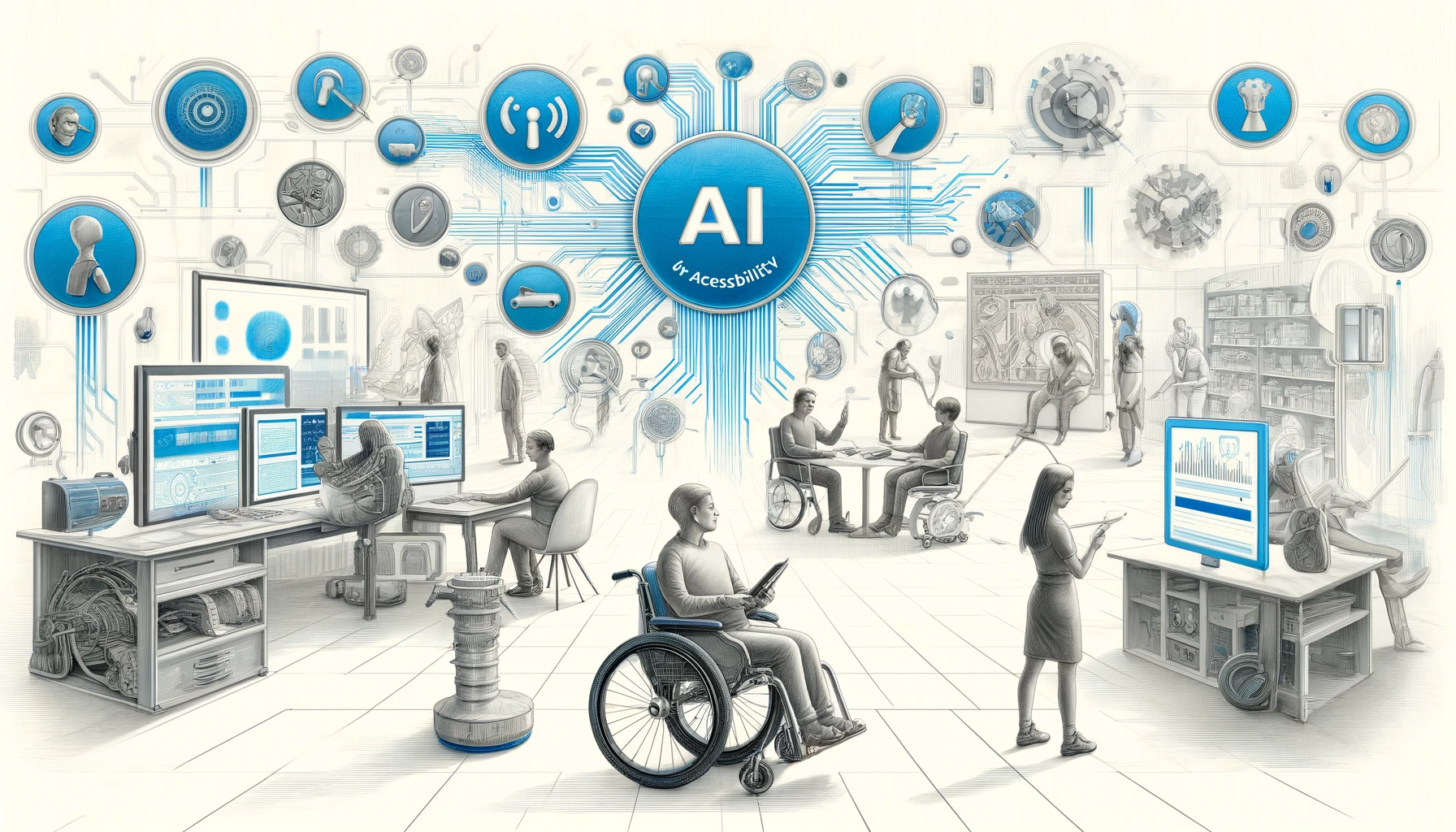
AI and accessibility focuses on leveraging artificial intelligence to create inclusive design solutions that accommodate diverse user needs, particularly for individuals with disabilities.
#Infobox
#Overview
Artificial Intelligence (AI) and accessibility intersect to create technologies that enable individuals with disabilities to interact with digital and physical environments more independently. AI-driven solutions automate tasks such as text-to-speech conversion, image recognition, and real-time transcription, reducing barriers for users with visual, auditory, motor, or cognitive impairments. These innovations are rooted in the principles of inclusive design, which emphasizes designing products and services that are usable by everyone, regardless of ability.
AI enhances accessibility by analyzing user behavior, predicting needs, and adapting interfaces dynamically. For example, AI-powered screen readers can interpret web content and describe it audibly, while machine learning models improve speech recognition for individuals with speech impairments. The integration of AI into accessibility tools has accelerated the adoption of universal design standards, ensuring compliance with regulations such as the Web Content Accessibility Guidelines (WCAG) and the Americans with Disabilities Act (ADA).
#History / Background
#Early Developments
The concept of using technology to assist individuals with disabilities dates back to the mid-20th century. Early innovations included mechanical devices like the Braille typewriter (1892) and the teletypewriter (TTY) (1964), which enabled communication for people with hearing impairments. The introduction of personal computers in the 1980s and 1990s marked a turning point, as software developers began creating assistive technologies such as screen readers and alternative input devices.
In 1997, the World Wide Web Consortium (W3C) established the Web Accessibility Initiative (WAI), which laid the groundwork for digital accessibility standards. The first version of the WCAG was published in 1999, providing guidelines for making web content more accessible to people with disabilities.
#Rise of AI in Accessibility
The 2010s saw a surge in AI applications for accessibility, driven by advancements in machine learning, natural language processing (NLP), and computer vision. Key milestones include:
- 2010: The release of Siri by Apple, which demonstrated the potential of voice assistants for users with mobility or visual impairments.
- 2016: Google introduced Live Transcribe, an AI-powered app that provides real-time captioning for individuals with hearing loss.
- 2018: Microsoft launched Seeing AI, a mobile app that uses computer vision to describe people, objects, and text for visually impaired users.
- 2020: The adoption of AI-driven automated captioning tools in video conferencing platforms like Zoom and Microsoft Teams, improving accessibility for deaf and hard-of-hearing users.
These developments reflect a broader shift toward integrating AI into mainstream technologies, making accessibility a core consideration rather than an afterthought.
#How It Works
#AI Technologies in Accessibility
AI enhances accessibility through several key technologies:
Natural Language Processing (NLP)
Enables machines to understand and generate human language, powering tools like speech-to-text and text-to-speech systems. For example, NLP algorithms convert spoken words into written text for individuals with hearing impairments or generate audible descriptions of digital content for visually impaired users.
Uses deep learning to analyze visual data, such as identifying objects, reading text, or describing scenes. Applications include AI-powered screen readers that interpret web pages and mobile apps that provide real-time feedback on surroundings for blind users.
Trains models to recognize patterns in user behavior, improving the accuracy of assistive tools over time. For instance, ML algorithms can predict the most likely actions a user with motor impairments might take, optimizing interface layouts for easier navigation.
Converts spoken language into digital text or commands, enabling hands-free interaction for users with limited mobility. Modern speech recognition systems, such as those used in smart speakers and virtual assistants, support multiple languages and dialects, further expanding accessibility.
#Implementation in Products
AI-driven accessibility features are integrated into various products and platforms:
- Operating Systems: Windows, macOS, and Linux include built-in accessibility tools like screen readers (e.g., NVDA, VoiceOver) and voice control systems.
- Web Browsers: Extensions like ChromeVox and JAWS use AI to enhance web navigation for users with disabilities.
- Mobile Apps: Applications such as Be My Eyes connect visually impaired users with sighted volunteers via AI-powered video calls, while Otter.ai provides real-time transcription for meetings.
- Wearables and IoT: Devices like smart glasses (e.g., OrCam MyEye) use AI to read text, recognize faces, and provide auditory feedback.
#Important Facts
- Global Impact: Over 1 billion people worldwide live with some form of disability, according to the World Health Organization (WHO). AI-driven accessibility tools have the potential to improve quality of life for a significant portion of this population.
- Economic Benefits: The global market for assistive technologies is projected to reach $31.7 billion by 2027, with AI playing a critical role in driving innovation and affordability.
- Regulatory Compliance: Laws such as the European Accessibility Act (EAA) and the Accessible Canada Act mandate digital accessibility, pushing organizations to adopt AI solutions.
- Ethical Considerations: AI systems must be designed to avoid biases that could exclude certain user groups. For example, speech recognition tools trained primarily on standard accents may struggle with regional dialects or speech impairments.
- Interoperability: Many AI accessibility tools rely on open standards like WAI-ARIA to ensure compatibility across different platforms and devices.
#Timeline
- Invention of the Braille
Invention of the Braille typewriter by Frank Haven Hall.
- Development of the teletypewri
Development of the teletypewriter (TTY) for deaf individuals.
- Release of the first
Release of the first commercial screen reader, [JAWS](# 'JAWS (software)').
- W3C establishes the Web
W3C establishes the Web Accessibility Initiative (WAI).
- Publication of WCAG 1.0
Publication of WCAG 1.0.
- Apple introduces Siri, a
Apple introduces Siri, a voice assistant that aids users with mobility or visual impairments.
- Google launches Live Transcrib
Google launches Live Transcribe for real-time captioning.
- Microsoft releases Seeing AI
Microsoft releases Seeing AI, an app for visually impaired users.
- Zoom and Microsoft Teams
Zoom and Microsoft Teams integrate AI-powered captioning.
- EU adopts the European
EU adopts the European Accessibility Act, requiring AI-driven accessibility compliance.
#Related Terms
#FAQ
What does AI And Accessibility: Inclusive Design cover?
Explores how artificial intelligence shapes accessibility and inclusive design, covering practical use cases, benefits, limitations, and risks.
Why is AI And Accessibility: Inclusive Design important?
It helps readers understand key concepts, compare practical use cases, and evaluate how Security & Privacy decisions affect outcomes, risks, and implementation choices.
What should readers verify before applying this topic?
Readers should compare the benefits, limitations, data requirements, and related themes such as Accessibility, Inclusive, Design before using the ideas in real projects.
#References
- AI And Accessibility: Inclusive Design terminology and background research
- AI And Accessibility: Inclusive Design use cases, implementation examples, and limitations
- Security & Privacy best practices, standards, and risk guidance
- Accessibility case studies, benchmarks, and current industry analysis



Comments
No comments yet. Start the discussion with a useful note.